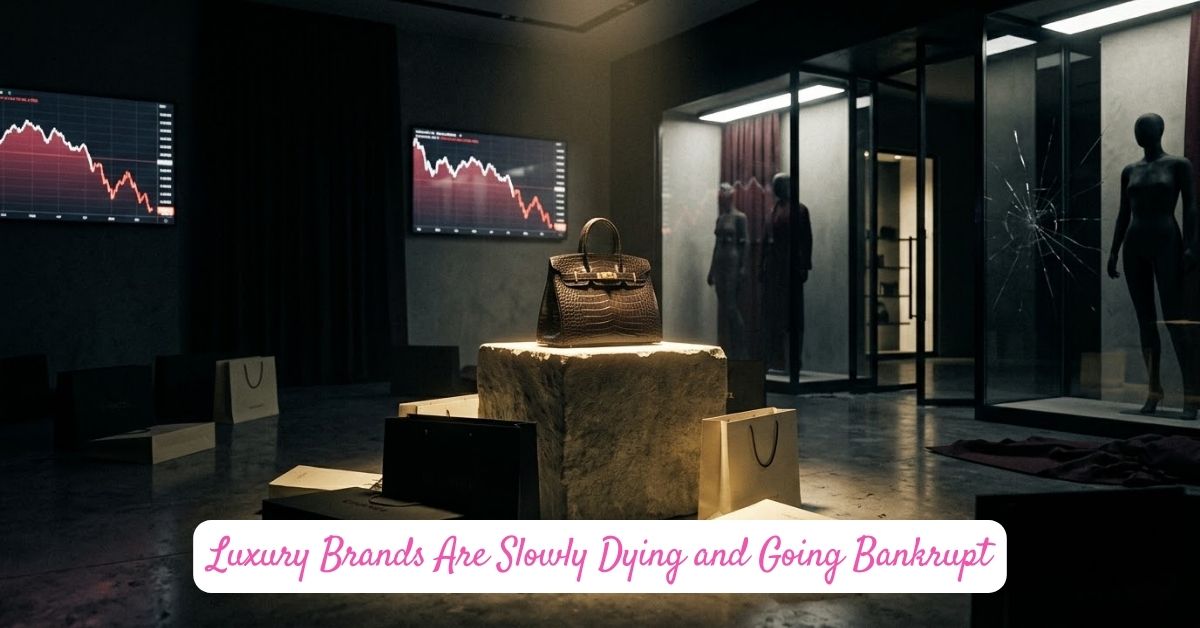
Pull my eye, we are all expected to be worshipping a handbag that costs three thousand dollars and that has been placed under a spotlight as though it were the second coming. We are expected to say its name like a prayer, wait six months and feel special as we finally swipe the card. However, in this case, 2026, the veil is being drawn back, and the truth is… many of these brands are bankrupting at a faster rate than you can say, it is a classic investment piece.” Luxury brands are slowly dying and going bankrupt, and honestly? We need to talk about it.
The Fall of the Fashion Empires
Let’s just get right into it. The beginning of January 2026 was marked by one of the largest luxury bombshells in recent history. The parent organization of Saks Fifth Avenue, Neiman Marcus, and Bergdorf Goodman, Saks Global, took Chapter 11 bankruptcy protection, having gone out of cash and unable to raise enough investor funding as a result of its extremely leveraged acquisition of Neiman Marcus in 2024. Yes. Saks Fifth Avenue. The shop that has been featured in all the movies since time immemorial that are despite their rich people shop here. Bankrupt.
And it did not stop there. In January 2026, Pat McGrath Labs, the eponymous high-end beauty brand created by the legend Pat McGrath, became Chapter 11 bankrupt and revealed over $50 million in debts. It is a woman who has constructed an empire using one highlighter that shattered the internet. And yet — here we are.
Why Are the Big Names Crumbling?
It is not as glamorous as the brands themselves are supposed to be. Even the luxury department stores are competing with the brands that they stock. Over the previous two decades, numerous luxury brands established their own retail outlets, such as Dior, Chanel, Louis Vuitton, and the department stores were put in a vastly different situation. Saks is selling Gucci yet Gucci has got its own shop within two blocks. The reasoning begins to disintegrate.
Then, there is the debt issue. The combined effects of the general slowdown of the global luxury sales market, Saks had to bear heavy debt following its merger with Neiman Marcus in 2024. Combining two already-troubled behemoths and wishing this time the numbers will be different is the corporate style version of cutting your bangs to make your life. It never works.
The 2025 Bloodbath Nobody Warned Us About
Before we even got to 2026, 2025 was already doing the absolute most. Luxury brands are slowly dying and going bankrupt was fundamentally the title of the whole year.
In April 2025, Ralph and Russo, the high-end fashion house based in London, which used to dress Meghan Markle in her official engagement photos, declared a second insolvency petition in three years. A brand which hung red carpets at royal balls, and which is back in the bankruptcy court – again. It is providing the energy of touching the hot stove and being surprised.
In March 2025, Forever 21 declared Chapter 11 bankruptcy and intended to close its operations in the United States as it evaluated the sale of its assets. Interestingly, it is their second bankruptcy. Forever 21 literally meant forever and forever but they did not mean it in the way they were meaning.
The Rental Economy Did Not Save Anyone Either
A short time ago, fashion rental seemed the genius in between – have the high-end appearance, but not the high-end cost. CaaStle, a so-called Clothing as a Service, was a company that applied to the Chapter 7 bankruptcy in June 2025, several months after the resignation of its CEO Christine Hunsicker, which initiated a corporate fraud scandal. Infinite closets, infinite drama, endless returns.
And the next was SSENSE which is a luxury fashion retailer based in Montreal and had been valuated at more than 3.6 billion a few years ago. In August 2025, SSENSE was in surprise creditor-led creditor-led court application to sell the company but instead filed under the Companies Creditors Arrangement Act of Canada. Even those platforms that were deemed to be the future of luxury retail began to disintegrate at the seams.
The Consumer Has Changed and Nobody in Luxury Listened
It is the awkward fact that the large houses have been spared of; the shoppers did change, and the brands did not. The luxury customers, particularly the younger generation of below 35 years, is increasingly price-sensitive and value-oriented as they have been seeking substitutes such as resale and smaller luxury goods. The luxury brands are also expecting luxury brands to be more creative in their designs and more ethical and more demanding in terms of quality.
The millennials had worshipped logos, and Gen Z did not do so. They were brought up on Depop, Vinted, and vintage hauls. They know about value on the resale, they care about sustainability and definitely not going to borrow a silent loan to purchase a belt merely because a brand tells them it is a status symbol.
Aspirational Luxury is the Most Vulnerable
It is a difference between a person who truly does not wince at a 10,000 coat, and one who is pushing his budget to the limit to make himself think he is on that level. Luxury consumers fall into two categories, people who are genuinely rich and do not bother with price, and aspirational luxury consumers who make a stretch to purchase something good. With the tightening of the economy, which category of people goes away first? The aspirational customer presses the brakes. And there is precisely the kind of customer Saks, Neiman Marcus, and half these “luxury” brands were relying on.
The Global Luxury Slowdown is Real
It is not simply an American tale. The decline is occurring in the world market. Dior and Chanel are increasing the number of lower priced bags and accessories to draw back aspirational buyers who have not been unable to purchase the luxury product in recent years due to high prices. Read that again. Dior and Chanel the two most recognizable labels in the fashion industry are being forced to retrace their pricing policy due to over pricing the common man entirely out of the market and are now reaping the rewards.
China that was intended to be the undeterred luxury growth power has cooled too. Consumer confidence in China after the pandemic did not recover in relation to the luxury houses betting as predicted. The brands who had developed comprehensive growth plans based on the Chinese market were left with a very costly bag, so to speak.
The Price Hike Era Backfired
Whether it was luxury brands or not, remember the naughty times when prices were increasing every few months in 2021 and 2022, all due to supply chains and inflation. Consumers noticed. And what they had observed was that the quality was not keeping up with the price. The luxury consumption across the globe is facing heightened pressure due to the loss of confidence by luxury consumers. To the extent, you can only explain to people that a tote bag is priced at $4,000 before they begin to ask very uncomfortable questions.
So Where Does Luxury Go From Here?
This is the point, luxury is not dead. Bad luxury is dying. The collapsing brands are those that over leveraged, over charged, under performed, and who did not read the room. And honestly, good.
The future is of the brands doing something real. Smaller, independent labels which possess a true point of view. Brands that value workmanship over hypes. The resale market is booming. Vintage is undergoing its third revival. Consumers have never been wiser and they are now channelling their funds into things that actually matter to them in quality, in culture, in meaning.
Luxury brands are slowly dying and going bankrupt not that people ceased to be concerned about beautiful things. They are being killed as they ceased to manufacture them.
The itismandystyle Take
The theatrical aspect of the fashion industry has been present since the beginning, the spectacle, exclusivity, the mythology. However, mythology just works until people notice that the emperor is wearing a sweater that costs him/her 3,500 dollars with a flaw on the factory as well as a debt to equity ratio that would make an accountant weep.
What is emerging out of the rubble is more interesting: mindful shoppers, standalone designers, a secondhand market that is upending the game in regard to the inherent value of clothing altogether. On the one hand, the future of fashion is not a fading store of a mall on its deathbed. It is more intelligent, individual, more deliberate.
And honestly? It’s about time.