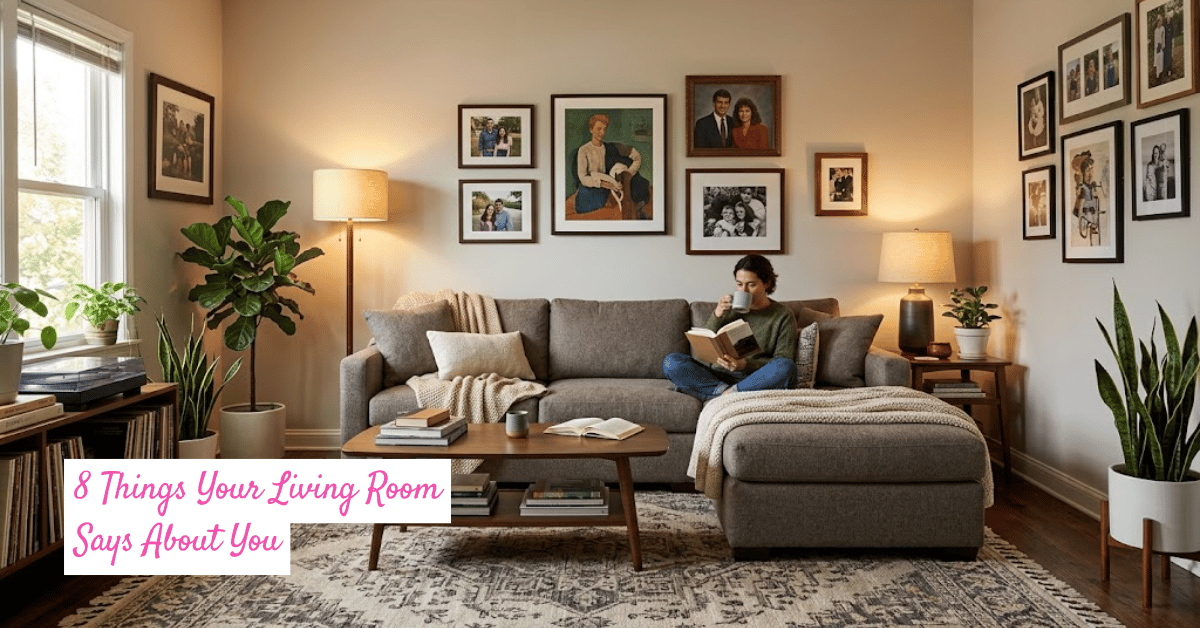
Your living room communicates through its palette, its seating, its lighting, and everything it keeps or rejects. The intelligence that goes into building a deliberate personal wardrobe applies directly to this space. Considered colors, a commitment to quality, and the willingness to make a firm choice all matter here.
While clothing speaks to the outside world, your living room speaks directly to you. This makes it the most private form of self-expression available. Living room as personal style acts as an identity project rather than a purely aesthetic one.
The choices you make here speak volumes about what your home says about you, even without an audience to perform for. The following eight elements offer clear readings of what each specific choice communicates about personal values, priorities, and the willingness to commit to a space.
1. The Color Palette
A neutral-defaulted room coated in greige or white often communicates hesitation. This readable signal highlights a reluctance to commit to a specific living room identity. A deliberate palette communicates confidence and the willingness to make a choice that belongs specifically to one person in one space.
A considered neutral differs heavily from a fearful one. The signal lies entirely in the intentionality behind the color choice rather than the dramatic impact of the final result.
2. The Quality of Primary Seating
No single piece communicates more about a person’s willingness to commit to their space than the main sofa. A rushed placeholder piece indicates a space still treated as temporary. A considered, high-quality seating arrangement signals a firm recognition that this is where daily life actually happens. The sofa acts as a central style statement based on practical intelligence rather than just price point or fleeting trends.
A design prioritizing physical rest over pure aesthetics communicates a commitment to actual comfort. A piece featuring 24-inch-deep seats, deliberate fabrics, hidden storage, and a 10-year warranty signals serious aesthetic intentionality.
For those mindful of corporate values, Home Reserve’s comfortable deep seat sectional embeds these priorities into the product itself. The made-in-USA construction and carbon-neutral shipping carry clear signals about what brands the buyer supports.
The entire room anchors itself around this specific piece of furniture. Secondary elements like throw blankets, table lighting, and wall art all function in direct relation to the primary seating. Securing the right foundation establishes the physical and visual weight of the remaining decor.
| Key Insight: A sofa chosen for depth-of-seat comfort over mere profile signals a deliberate commitment to the room anchoring every other design decision around it. |
3. The Lighting Choices
A room relying exclusively on a single overhead fixture prioritizes raw function over atmosphere. Overhead-only lighting leaves a space technically visible but ignores how the environment feels during different hours of the day.
Layered lighting tells a more complete story about the inhabitants. A floor lamp positioned near a reading chair or a dimmable table lamp at eye level communicates clear attentiveness to daily routines.
Research indicates that exposure to warm light leads to increased positive moods and higher feelings of social connectedness. Placing warm-spectrum bulbs below eye level creates an intimacy that harsh overhead lighting cannot replicate. Controlling mood through deliberate light placement serves as a subtle form of daily self-care.
4. The Books and Media
Visible items like books stacked on a coffee table or records displayed on a shelf directly communicate intellectual and creative identity. A curated visible collection acts as a specific act of self-declaration. Leaving these items out shows that the inhabitant values them and refuses to conceal their interests.
The absence of any books or media communicates either a strict intentional minimalism or a reluctance to declare personal taste. The signal relies entirely on honesty rather than arranging impressive titles just to impress visitors. What remains out in the open reflects what the inhabitant genuinely uses and values on a daily basis.
5. The Plant Life
Live plants communicate a clear willingness to maintain living systems and take responsibility for something outside oneself. Keeping even a single healthy plant alive requires the kind of attentiveness that notices when soil needs water. Studies show that maintaining indoor plants can significantly lower stress and anxiety while increasing feelings of cheerfulness.
Artificial plants communicate an appreciation for natural aesthetics without the ongoing relational commitment. This choice secures a specific visual look while directing daily priorities elsewhere. An entirely plantless room simply indicates that the inhabitant’s focus lies on different types of decor or maintenance.
| Quote: Even one healthy plant communicates: I notice, I tend, I return. It’s a different energy from a perfectly static room. |
6. The Textile Quality
Throw blankets, floor rugs, and seat cushions communicate tactile values and physical comfort. Home decor as self-expression appears most honestly in the textiles you physically interact with every day. A scratchy decorative throw or a thin rug sliding underfoot signals a room still performing for an audience rather than serving its owner.
Considered textiles prove that physical comfort ranks equal to visual appearance. The physical difference between a stiff decorative cushion and one designed for daily back support is immediately obvious. A rug carrying enough weight and pile to feel grounded underfoot fundamentally changes the sensory register of the entire room.
7. The Art on Displays
Wall art stands as the most direct declaration of taste in any living space. Bare walls communicate either a confident minimalist approach or a room still waiting for its owner to claim it. Prints bought solely to match a color scheme communicate a completely different priority than work carrying a specific personal story.
Art collected slowly, inherited from family, or created by a known artist communicates strong interior design personal identity. The signal has nothing to do with financial cost or prestigious gallery names.
8. The Level of Intentional Editing
The specific objects a person keeps on display communicate deep self-knowledge, while the items they remove demonstrate confidence. A room cluttered with unwanted gifts or outdated furniture points to a difficulty with committing to actual preferences, leaving the home as personal statement deferred. Research confirms that individuals living in highly cluttered homes are 77% more likely to show elevated cortisol levels compared to those in organized spaces.
A room edited down strictly to genuinely loved or useful items communicates a highly settled sense of self. Maximalist spaces can still undergo rigorous editing to ensure every displayed item serves a purpose.
| Key Insight: Editing is not minimalism. A room edited down to only what is loved and used reveals a clear, settled sense of self even in maximalist form. |
The Bottom Line
The living room remains the one space built entirely for the daily habits of the person residing inside it. Palette choices, layered lighting, visible media, and intentional editing all project clear signals about personal priorities. The central seating acts as the strongest physical anchor for these decisions. A sofa selected for 24-inch deep cushions, hidden storage, and durable fabric transforms abstract design preferences into a tangible foundation.
Recognizing the living room as a communication tool allows for more deliberate decisions regarding comfort and layout. Taking control of the textiles, the warm-spectrum bulbs, and the wall art ensures the environment reflects the actual inhabitant. The space functions best when every physical object supports the daily routines occurring within those walls.
| Author Profile: Home Reserve is the leading manufacturer of adaptable modular furniture for families seeking durable, sustainable solutions for everyday living. |