Be frank, whenever you mention the name Kardashian, you will likely think of multi-million dollar business, sold-out makeup lines, and brands that are literally printing money. However, here is the tea that no one speaks about enough: not everything the Kardashians touch turns to gold and they always say everything is sold out, but this is fake. Some of their business enterprises have failed worse than a reality show participant in the initial episode of the reality TV show and yet, they have their huge following with millions of fans who cling onto each of their Instagram posts. I had years of observing how this family has been dominating pop culture, and though their accomplishments cannot be disputed, the story of their failures is even more intriguing. Since, after all, when they launch as many brands as they do, some of them are bound to fail. And trust me, some of these failed brands of the Kardashians missed by a mile.
The Kardashian Kard That Got Declined
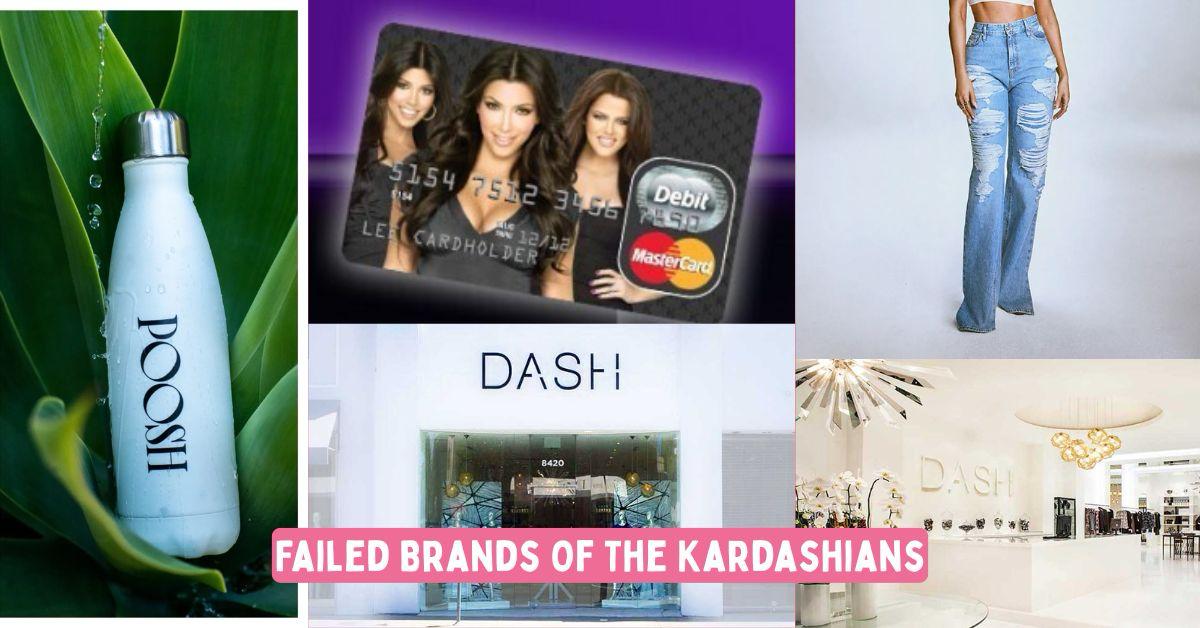
Do you remember when the Kardashian sisters believed that they could penetrate financial industry? Nor does most of the internet, yeh. In 2010 Kim, Khloe and Kourtney introduced a prepaid debit card called the Kardashian Kard targeting their young audience. Sounds harmless, right? Wrong. The Kardashian Kard was dragged through the mud faster than you can say “financial predator.” The card was accompanied by charges that were so absurd that consumer protection organizations literally exposed them in an open environment. We are talking of activation fees, monthly fees, and transaction fees, in other words a fee to breathe when carrying the card. The Attorney General of Connecticut even intervened and in less than a month after the launch, the card was cancelled. This was not a flop but a complete PR disaster. The family had to find out the hard way, that affixing their name to a financial product aimed at teenagers with astronomical charges, is not the step. At least they turned about, yet the loss of their reputation in the business world? That took a minute to repair.
Khloé’s Denim Disaster
As the Kardashian who has never left it such a fact, when Khloé Kardashian launched Good American in 2016, people were very excited. The confidence to wear any size and the body-positive message of it was true to her brand. But we should retrace back a few steps to her previous denim business which no one wants to recollect. And, prior to Good American turning into the success story it is currently, there were whispers and hints at other lines of fashion that did not really catch fire as they wanted to. The failed brands of the Kardashians in the fashion space taught Khloé valuable lessons regarding authenticity, size and really hearing what women want. Not all celebrity can simply slap their logo on jeans and have them sell like that, you have to have a real relationship to what you are selling.
Kendall and Kylie’s App Apocalypse
The family was riding on the success of Kim in mobile game and thus, in 2015, decided to start their own apps. The Kendall and Kylie jumped on the wagon by providing exclusive content, style tips, and access to the back-end of their glamorous lives. The problem? No one was willing to subscribe to any content that they could freely access on Instagram. Although Kim was successful at first, the versions of Kendall and Kylie had difficulties in retaining the subscribers. A shutdown of all the family apps occurred in 2018. Turns out, even the Kardashians couldn’t convince people to pay for what social media already provided. The application marketplace is rough, and exclusive content holds no value when you are already over sharing on all platforms that you can. This failure is even more apparent as we head to 2026. Gen Z will not spend their money on an app when Tik Tok, Instagram and YouTube will provide them with a lot of free entertainment. The sisters were before the trend of the subscription but did not do it at the right time and in the wrong format.
Kris Jenner’s Skincare Line That Vanished
Kris Jenner, the mastermind momager of the whole Kardashian enterprise, also has wanted a slice of the beauty industry pie. Or actually shall we call her the pimp of all children? She silently unveiled a skincare range which was to be the competition to her daughters literally mega-successful brands. The difference? Her own went through more quickly than Scott Disick on a commitment. Time and saturation of the market were the issues of Kris skincare business. Kylie Cosmetics had already been a billion-dollar brand (at least in theory) by the time she entered the game, Kim had KKW Beauty, and Kourtney was in the wellness business with Poosh. The market didn’t need another Kardashian beauty brand, particularly one that did not possess the equivalent marketing muscle and distinctive approach as those of her daughters. This is a vital lesson to 2026 and other times: you can not make it with a famous name without differentiation. There are too many celebrity brands in the market and consumers are becoming more conscious regarding what they really need and what influencers are telling them they need.
Kourtney’s Lifestyle Brand Struggle
Kourtney Kardashian has always established herself as the wellness-loving, organic-living sister. In 2019, she started her lifestyle brand Poosh and the website under the promise of becoming Goop of the Kardashian universe. However, this is where it goes to hell: Poosh has been unable to establish its identity and bring the same income as her sister brands do. Although it is not a downright success, Poosh is an example of what the construction of a lifestyle brand in a market that already has a lot of players would look like. The failed brands of the Kardashians aren’t never-ending dramatic shutdowns- there are occasions when they are just magnanimous enterprises that do not reach their potential. The expensive wellness products and retreats advertised by Kourtney are not in touch with average consumers, which is problematic given that we are entering an economic environment where individuals have become increasingly conscious of their purchases. The real issue? Gwyneth Paltrow has already monopolized the out-of-shape-pricey-health-wellness sector, and replicating that recipe in 2026 when buyers will seek authenticity and money-saving is not viable.
The Dash Boutique Shutdown
Over the years, Kardashian sisters operated Dash a clothing boutique available in Los Angeles, New York, and Miami. Their reality show featured it a lot and it appeared as a legitimate business venture. In 2018, however, all three of them were permanently shut down. The sisters gave reasons of their hectic schedules and other business undertakings they had as the reasons of closing it but we should look in-between the lines. Dash was not able to compete with online shopping and fast fashion. The Kardashians were trying to run a established brick-and-mortar retail company in the time when e-commerce was destroying brick-and-mortar stores left and right. The fact that they failed to do so is rather a demonstration of some business savvy they realized that it was time to reduce their losses rather than pouring in more resources into a failing model. But it also proves that the failed brands of the Kardashians often is a result of not adapting fast enough to the changing consumer behavior. This lesson is never more applicable than in 2026 when the retail is engaged in an active mammoth change.
What These Failures Tell Us About 2026 And Beyond
Here’s what’s fascinating about the failed brands of the Kardashians: they do not fail due to not trying hard or because of their marketing strength. The family can reach out to millions of fans, unrestricted funds and access to the most talented marketing brains that money can buy. They are unsuccessful because they read the market wrong, when they enter without differentiation, or they simply attempt to ride on their name without providing anything of substance. The future of the business in 2026 is even more hostile. Consumers are tired of celebrity brands, are skeptical of influencer marketing, and are remarkably discerning in knowing which products are cash grabbers and which products are genuine. The Kardashians will need to evolve their approach if they want to avoid adding more failed brands to their roster. The moral of the story to any viewer be they a business owner or simply intrigued by business celebrity relationships is that fame and followers are no longer sufficient. You require authentic novelty, reasonable costs, authentic attachment to your product and flawless timing. Even the mighty Kardashians can’t escape these fundamental rules of business. It is possible that their mistakes may not feature on the same cover as Kylies Forbes or the success of Kim Skims, but these are, perhaps, more informative. Success teaches you what works but failure teaches you what not to do. And the failed brands of the Kardashians have plenty of lessons to offer.