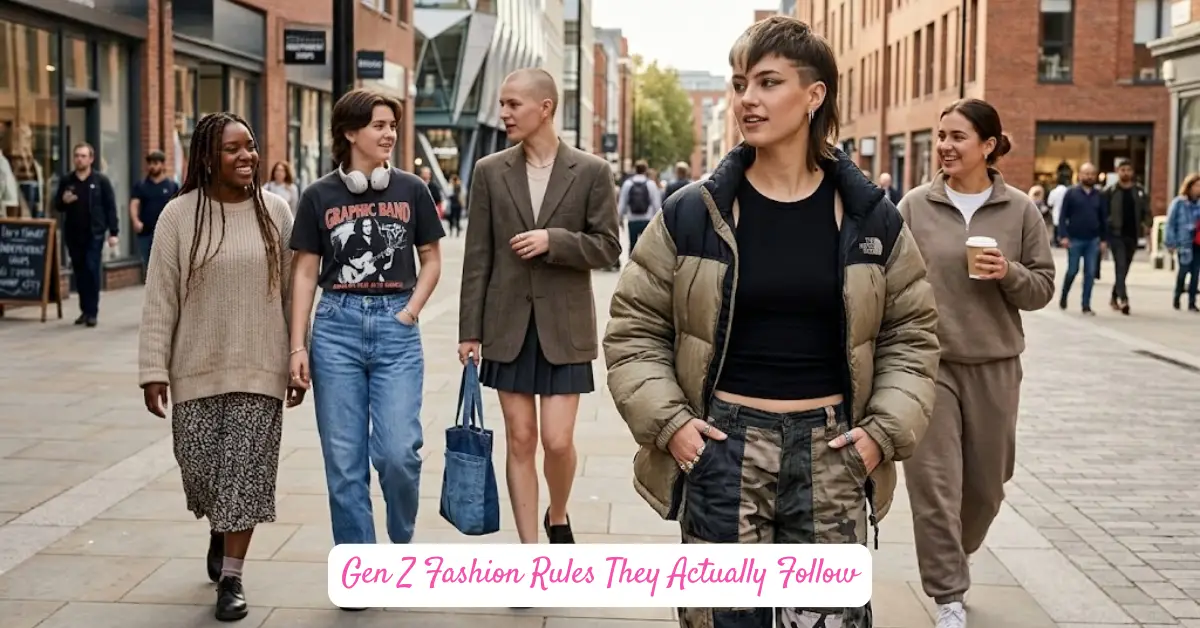
Okay, let’s get something straight right away. Gen Z has completely rewritten the fashion Let’s start with a point here, shall we? Gen Z has revolutionized the fashion rule book. The top rule: There are no rules. Well, there are rules — and I’ll tell you — rules (except). They’re different ones, that is. Better ones. Weirder ones. Those that will make more sense when you think about them for longer than 30 seconds. Gen Z fashion isn’t about what you should or shouldn’t wear and it’s not about what the magazines are saying is in this season. They’re about purpose, self-awareness, and integrity? A bit of chaos in a controlled manner. If you arrived here looking for a listicle of what jeans are in trend, I imagine you will need to step back and stay for awhile, as the trend for the moment in the Gen Z fashion is far more intriguing.
Rule #1: Mix Your Price Points Like a DJ Mixes Tracks
It seems that the concept that everything you wear should fall into one tax bracket passed by around 2019 and nobody cried. A $400 vintage coat set off with a $12 H&M style tank top looks amazing, which is not a letdown, it’s a flex, one of the rules of Gen Z fashion. So this generation was raised on the stress of brand consistency with their older siblings and they said, loudly and clearly: Absolutely not.
Where It Comes From
This is from a real world perspective. Gen Z are adults in an economic climate of tensions, spiralling student loans, and a cost of living crisis. For most people, it would not have been an option to dedicate their entire paycheck to purchasing one specific piece of clothing just because they were trying to make it look “put-together.Most people couldn’t afford to spend their entire paycheck on one specific piece of clothing just because they were trying to look “put-together. Then it was all about creativity. Zara basics, whether with archival pieces or thrifted gems, have been spotted by virtually all the style creators on TikTok in 2024 and 2025, including Rickey Thompson and even Emma Chamberlain (pre-Vogue days).
How to Actually Do It
The trick is to select a single statement piece, one with texture, history or a strong visual impact, and let all the other elements support it without intruding. Disheveled and oversized vintage pants from a thrift shop? Great. Next, add a simple fitted T-shirt and clean sneakers and let the trousers tell the tale. Don’t overthink it. The point is the mixing.
Rule #2: Thrift First, Ask Questions Later
Sustainability isn’t a passing fad for Gen Z. It’s an attitude that runs through their shopping styles, and one of the Gen Z fashion laws that has actually revolutionized the retail sector. It became the go to spot, not the last resort, for depop, Vinted, ThredUp or your local thrift stores.
Where It Comes From
This anxiety towards the climate is not so mythical, and fashion is among the most polluting industries in the world. Gen Z knows this. They have been taught by the school, they can see it in their feeds and a lot of them feel a real moral discomfort when buying fast fashion – though some of them also do it, we’ll get to that complicated part in a minute. This kind of shopping is no longer the option of the frugal person, it’s the morally correct one these days, as do many creators such as Alix Earle and Wisdom Kaye.
How to Actually Do It
Make some thrifting goals before you depart. When you enter into a thrift shop without a strategy is when you come out with 7 items that you don’t have a matching piece for. Discover your gaps — require a structured blazer? A going-out top? A winter coat? If you are going with a mission, you will come across something in your wardrobe that makes sense. And make proper use of Depop’s search filters! Arrange in order of size and colour. There is your future best buy somewhere within the person’s regrets, and it’s there.
Rule #3: Comfort Is Not the Enemy of Cool
This one might have been the cause of the most controversy between the Millennials and Gen Z, but that’s us. Heels that don’t fit, jeans that are so tight you can’t breathe in, bags that are too small to fit anything — Gen Z said, respectfully, no thanks. Don’t call it being lazy just because they are all oversized, flat shoes, or trainers are considered serious fashion. They are liberation.
Where It Comes From
And of course, take responsibility for the pandemic winters, the streetwearization of high fashion, and the fact that brands such as New Balance and Salomon have become part of the conversation for culture. Honestly, after spending a year and a half in sweatpants you will always be uncomfortable in another kind of clothes. Bella Hadid effortlessly turned vintage Adidas Sambas into the most planned-out shoe she could possibly wear. Rihanna’s oversized puffer jackets and big boots were the perfect way for her to look incredible all the time during her pregnancy. The message landed.
How to Actually Do It
Comfortable is not a synonym for unconsiderate or unsculptural. Proportion is everything. If you’re going oversized on top, try something more fitted or tapered on the bottom and vice versa. The silhouette remains important — it’s just that you’re picking a different silhouette. The same pants, shirt and flat loafer can look completely different depending on the type of fabric, whether it’s structured or slouchy. Though the clothing is loose, much of the work is done by fabric and fit.
Rule #4: Gender Is a Suggestion, Not a Section in the Store
A one of the most culturally impactful rules of Gen Z fashion is that clothing is not for gender but for bodies. Dressing in skirts, wearing tailored suits, dressing how you feel on any given day — this is nothing new to Gen Z. It’s just Tuesday.
Where It Comes From
This reflects a broader cultural debate on gender identity for Gen Z that they have experienced since birth. But it is also an echo of certain style influences: Harry Styles on magazine covers wearing lace blouses and pearls, Janelle Monáe in immacately fitted men’s clothing, Lil Uzi Vert in corsets and platform boots and Bad Bunny in nail polish and thigh-high boots, which challenges the norms of Latin masculinity. It wasn’t edgy experiments, it was people wearing what they wanted. Gen Z watched and absorbed it all.
How to Actually Do It
Don’t look for something based on whether it was made at the store or by outside the store. If you see something that you like, wear it. The basics in the menswear section may be better, pockets may be better, suiting may be more interesting. Often better colours, prints and drape in the womenswear section. Shop both. The clothes are oblivious to your gender and they don’t care.
Rule #5: Irony and Sincerity Can Coexist in One Outfit
Gen Z fashion has a most intimate relationship with camp, iron and nostalgia; it takes a moment to get, but once one does, it’s impossible to unsee. The graphic tee that is worn ironically legitimately. The really horrid 2000s trend was found and worn in style. The ‘ugly’ shoe for which it somehow fits. It’s not by chance, it’s a whole aesthetic language.
Where It Comes From
Internet culture is basically the culture that Gen Z was born into, and the medium of exchange for internet culture is irony. Meme literacy infiltrates fashion literacy. Wearing a bootleg old style tee shirt or a pattern clash that’s meant to clash clearly says something — that you know the rules of the game so well that you know how to break them. It’s also a reaction to Millennials’ early Instagram days with a hyper-shiny, aspirational aesthetic. But Gen Z looked at that and decided to take the path of chaos.
How to Actually Do It
Confidence is the line that distinguishes between irony and simply being unclear. But don’t be afraid to wear ironic attire and stand on it. Combine your weird vintage look with something that anchors the outfit – a terrific pair of shoes, a clean bag, one way to communicate intent. If the one telling the joke doesn’t look like he knows what he’s doing, he has failed the joke.
Rule #6: The Anti-Trend Trend (Yes, This Is a Real Thing)
The fun part is here. Gen Z openly rejects microtrends and fast fashion – and engages in both as well, all the time. Rejection of trend culture is itself being a trend. And they know it. The difference comes in the self-awareness.
What This Actually Means
There is nothing hypocritical about the criticism Gen Z has for microtrends, it’s nuanced. It’s not a problem with wearing something that is in vogue. The issue is that they need to buy fifteen affordable versions of it, wear them 3 months, and then discard them after the algorithm advises them to. The concept is to wear what you really feel like wearing and to avoid rushing to the following trend, just when it’s fading. The mantra “buy it if you love it” is being used to carry a heavy weight as a principle in 2026.
Creators such as Mandy Lee (not the me, but a different Mandy, @oldloserinbrooklyn on TikTok) created massive following for pointing out that the trend cycle exists and that it’s being psychologically manipulated. The discourse on “de-influencing,” which began around the year of 2023, doesn’t seem to be diminished — it has evolved into an improved understanding of the fashion media landscape and the ability to interact with it without their approval.
Rule #7: Your Body Is Not a Trend
This one matters. Body Neutrality in Z Generation Fashion is a real cultural change that has come about that says that your body doesn’t have to look a certain way in order to wear certain pieces. No more “flattering” as the best of compliments. No need to dress to cover up, reduce or compensate. You’re supposed to look the way you look because that’s how you look.You wear what you wear because that’s the way you look.
Where It Comes From
It has taken the body positivity movement a step further to become body neutrality and it is quite a different and more sustainable thought altogether. Body positivity is a movement that encourages you to be proud of your body. Body neutrality encourages people to not have a specific opinion or feeling about their body — it’s just the body you have, and you can dress it any way you want. Prior to the complication, Lizzo used to establish an entire career around this principle. Paloma Elsesser, Precious Lee, and a new generation of models and creators have made visible what was not visible before and created this generation’s aesthetic sensibilities in part as a reaction to that visibility.
How to Actually Do It
But if next time you grab something and notice yourself saying “I could wear that once I…”, make that your next wear. Test it out in your existing body. See what happens. You may go off on a tangent. The “flattering” filter is a thing to be challenged every time, because it is normally the “smaller” or “more traditionally normative” filter and this is a choice rather than a rule.
Rule #8: Music Lives in Your Wardrobe
While fashion and music have always been connected, for Gen Z, it’s a connection that goes deeper and more personal than ever before. Your playlist is a sort of mood board.
The Subcultures Driving This
Afrobeats has ushered in a new era of bold prints, rich hues, sculptural designs and unapologetic glitz that has not only put artists like Burna Boy and Tems in focus, but also made a language that fans and designers have embraced. The aesthetic of the hyperpop scene — the baby Keem, 100 gecs, Charli XCX — is reflected in Y2K retro designs, rainbow hues, platform wear, and a style of pretty sensory overload. Bedroom pop includes the knits, muted pastel colors, vintage band tees, and the overall feeling of “this world is too much for me, but I look awesome” It was the introduction of clean sportswear, functional technical outerwear and a stripped back aesthetic that is in an understated way, quite threatening. Indie kids are always forever, always in their leather jacket and second hand blazer.
How to Actually Do It
Consider what you’re listening to and do you reflect that in your attire? Not in costume, but in an expression-of-self way. One of the easiest ways to become familiar with your own aesthetic is by tuning into music, since it has a sense of your emotional register. Your clothes are made visible, your clothes are just that.
What Gen Z Thinks About Millennial Fashion Rules
Alright, now we have to be sort of truthful. There’s been a Moment and there has been Millennials & Gen Z — online, in the culture, and of course in the comments section of every fashion video ever. The jean skinny situation. The side part predicament. The discussion around the “cheugy” term and whether it existed as a category or if it was merely mean-spirited — it was a little bit of both.
Gen Z’s opposition to millennial fashion norms is not on a personal level. It’s generational. Millennials grew up with a certain philosophy: simple is the way to be elegant, “basics” are the things you want to aspire to, and “wear it all” meant you wanted everything coordinated and not too loud. Well, that’s a perfectly logical aesthetic doctrine. But that’s not the case with Gen Z.
These are not things designed to shame Millennials for being maximalist, or for mixing things up, or for wearing vintage-new mixes, or for being gender fluid. They’re reactions to another set of cultural circumstances. Fashion sensibility of Gen Z is more plural, more referential, and more experimental since they were born into the online world, having no single entity to judge their tastes. The funniest part of this is that 10 years later, Gen Z’s taste in fashion will be what Gen Alpha considers embarrassingly out of style. This is how it works. As always. And honestly? Now that’s a pretty thing.
The Actual Point of All This
Identity has always been a big part of fashion. The difference with Gen Z is that identity became complex and requires complex answers. If you don’t fall into one category, if you’re not one thing or the other — culturally, aesthetically, gender-wise, body-wise, or taste-wise — it isn’t going to work for you if it’s a set of rules. You create new ones! Weirder ones. Actually rules that are values: buy less, wear what you love, dress for yourself, let music, community, irony, sincerity all live in your closet at the same time.
Fashion rules for Gen Z are indeed such. Not a list of ‘trends’. A continuous conversation between self and self. And that really is the most intriguing fashion story in years.