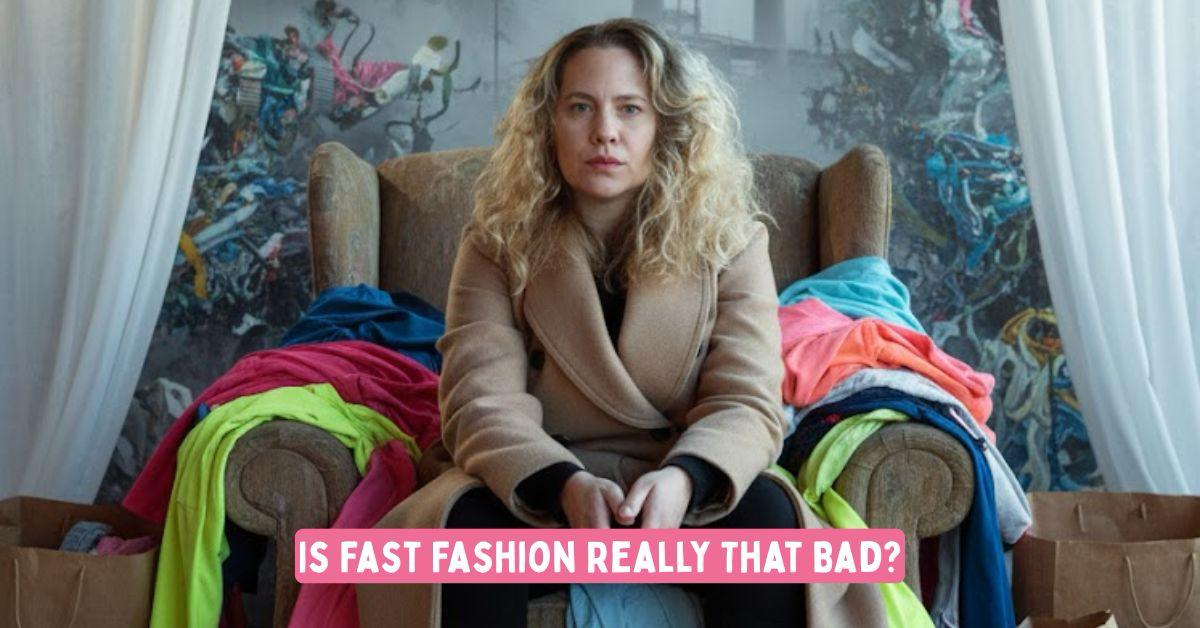
Will you be honest with me just a moment? I can nearly tear down a table each time a person attempts to scold me about my Zara collection when I am carrying a 200 SKIMS bodysuit that must be of costly material as it likely only required cost of about 8 dollars to produce. The hypocrisy is wild. We’ve been sold this story that fast fashion really that bad while luxury brands get a free pass, and honestly? We need to speak about the elephant in the room in head-to-toe designer.
I didn’t come here to give you advice on what to purchase or what to do with your money. However, what I will do is unveil the veil behind this luxury vs. fast fashion war, since you are about to discover a spoiler alert: your designer t-shirt that costs 800 will be no better than another person that has a 15 H&M one. The only difference? One is carried with an upscale tag and a huge premium that straight up to a yacht fund of some CEO.
The Uncomfortable Truth About Luxury Fashion’s Dirty Secret
Here’s what the fashion industry doesn’t want you to know: fast fashion really that bad compared to luxury? Sometimes luxury is worse. There, I said it. Back in 2018, brands such as Burberry struck the headlines by literally burning the unsold merchandise worth 37 million of money. Let that sink in. Instead of getting them at a discounted price so that the common people can enjoy them, they would prefer to burn down products that are in excellent condition. Extremely energetically conscious, eh?
At the same time, luxury conglomerates such as LVMH and Kering work on the same principles as fast fashion: to create as many items as possible, to create artificial demand by using the exclusivity, and to gain maximum profits. Their only major difference is that they do so with an improved marketing and sell it to you 10 times higher than the same method of manufacturing.
Kim Kardashian’s SKIMS: When Luxury Brands Play Fast Fashion Games
We should speak of SKIMS, as you have mentioned it. Kim Kardashian has already created a billion-dollar enterprise selling shapewear and basics that are sold between 50 and 200 dollars. The quality? Good, yet not groundbreaking. You can almost get the same items in Target at a fraction of the price. But what do you really get paid on? The name. The brand. The relationship with the culture of celebrities.
Fast fashion really that bad when SKIMS and other designers of luxury brands apply the same manufacturing techniques, utilize close to same materials and outsourced labor, set high prices? SKIMS drops new collections regularly, generates FOMO with the release of limited quantity, and promotes overconsumption in the same way as Shein does. It is just a matter of a higher price tag and Instagram appeal. It is high end fast fashion with a fake luxurious label, and we are all expected to know that it is somehow more ethical as it is pricier.
The Manufacturing Reality Nobody Wants to Discuss
Here’s where things get spicy. No matter whether you are purchasing a dress that costs Fashion Nova 20 dollars or a dress that costs a brand 2,000 dollars, there is a good possibility that they were produced in the same factories, maybe by the same labourers, and under the same circumstances. Prada, Dior, and Armani are just some of the brands that have been accused of poor labor conditions, so-called underpaid workers. Raising awareness is among the funding mechanisms by which the market strategy can be implemented (Bevan, 2017).<|human|>Some of the luxury brands were found out in 2024 to be making their products in sweatshops under the outskirts of Milan and paying workers as low as 2 per hour (Bevan, 2017).
Luxury business has perfected perception. They cut a Made in Italy label on the products and then all of a sudden we think that it is an ethically produced product made by skilled craftsmen. The truth is, however, much less glamorous. Most luxury brands partially outsource their manufacturing work or engage subcontractors that mistreat the workers in the same manner that brands in the fast fashion industry do. The enquiry conducted into the luxury brands that employed Chinese workers in Italy uncovered that the workers were in factory dorms, working 15 hours without any labor contracts.
Beyoncé and Luxury Collaborations: The Price Markup Game
By collaborating with Balmain on her Renaissance tour, Beyoncé drove people crazy with the designs. Beautiful? Absolutely. Worth the $5,000+ price tag? Debatable. What the majority of fans do not understand is that celebrity associations with luxury brands are running on huge markups. You are not paying only buying materials and craftsmanship you are paying marketing, celebrity endorsement costs, brand recognition and profit of the shareholder.
That is in comparison to when Beyoncé released her Ivy Park collection with Adidas. Produced the same way, cheaper, only to be deemed less prestigious at one point, due to being available. Fast fashion really that bad, or are we just snobs who’ve been trained to value exclusivity over actual quality and ethics? The cognitive dissonance is real.
Rihanna’s Fenty: Breaking Down the Luxury Price Barrier
At this point, Rihanna is to be credited. When she started Fenty Beauty and then Savage X Fenty, she also purposefully made the prices more affordable but did not compromise on quality. However, even Savage X Fenty items will cost between $50-$100 in lingerie. Does it out-robe the alternatives of fast fashion? Sometimes. Is it worth 5 times the price? It is at that point of debate that is interesting. You are at alignment with value added sizing, variety in marketing, and, of course, the name of Rihanna on it.
It is not to victimize Rihanna, she is in fact one of the better examples of celebrity brands attempting to find middle ground. But it illustrates how fast fashion really that bad is an intricate issue as soon as you understand that price is not necessarily synonymous with ethics, quality, or sustainability. It is sometimes merely superior branding and celebrity identification.
The Environmental Impact: Luxury Isn’t Saving the Planet
Another myth that needs to be broken is that luxury fashion is more sustainable. Fashion Transparency Index 2025 showed that the vast majority of major luxury companies rated worse on environmental and social responsibility issues compared to a large number of mid-range and even fast fashion brands. Why? Since luxury brands are mass manufacturers of goods, use unnecessary resources such as exotic leather and virgin cashmere and have enormous carbon footprints due to their international production and the flagship outlets.
A bag made by Chanel may be long lasting compared to a bag made by Forever 21, however, the ecological cost of the former bag, lambskin leather, treated with harsh chemicals is great. And the best part is that, due to the expensive price of luxury goods, people tend to purchase increased quantities of fast fashion to offset. Not able to spend the money on a new designer clothing every season? Hello, Zara. The luxury system in practice allows most of the consumers to consume fast fashion, but at times indulge in a single luxury item and stock their wardrobe with inexpensive items.
Zendaya and Law Roach: The Illusion of Luxury Accessibility
Zendaya and her stylist, Law Roach have brought some unbelievable sight on red carpets almost each time either in luxury brands such as Valentino, Versace and the Mugler archive lines. It is utopian, it is art and it is totally impossible to 99.9 percent of the population. This forms a loop in which consumers attempt to imitate these appearances with fast fashion which has been criticized, and the luxury industry that has created the desiring in the first place does not face any responsibility.
The fashion industry has established this system whereby luxury brands dictate the trends by celebrity dressing and by runway shows, fast fashion brands replicate the trends at affordable prices and the consumers are made to be blamed that they would like to be part of the fashion culture without having to spend the rented house cash on a single dress. Make it make sense. Is fast fashion really that bad, or is it merely the logical extension of a luxury business that generates want and exclusivity by pricing?
The Quality Question: Are You Really Getting What You Pay For?
My Shein purchases have lasted longer than several purchases I made at Reformation, which is called a sustainable brand and costs 10 times more. I have also had posh garments that disintegrated after a few dozens of uses. All prices in a range of 2026 are not consistent in terms of quality, and luxury brands are actively applying the same methods of cost reduction as fast fashion, including fused interfacing in place of hand-stitching, synthetic blends sold as innovative fabrics, and less expensive hardware with gold plating rather than solid brass.
Other brands such as Gucci and Prada have reduced their quality levels drastically within the last ten years and raised the prices. An old Prada bag of the 90s is objectively of higher quality than the new one of the same brand, and is cheaper on the resale market, just because it is older. Meanwhile, Prada today gives the glued seam bags with the synthetic linings at cost of 3,000 and above. The high end premium is becoming more about perception of the brand instead of the perceived high quality or craftsmanship.
Harry Styles and Gucci: The Marketing Machine Behind Luxury
The decision by Harry Styles to be an ambassador of Gucci and the face of their campaigns was not a matter of morals or excellence. It was pure marketing genius. Get a famous personality to endorse your brand, generate cultural experiences having a red carpet appearance, and in a flash you have a must-have cardigan of $1,200. The cardigan itself? It must have cost less than one hundred dollars to make, perhaps a hundred and fifty with the generous use of quality stuff.
This is the way luxury fashion will be working in the year 2026. It has nothing to do with production of better products, but rather production of need and preservation of the perception of exclusivity. When you understand this, the question of whether fast fashion really that bad compared to luxury is not really about impact anymore it is all about marketing and class indications and who is making the money off of your purchases. This is at least the case with fast fashion brands, where luxury brands claim to be what they are, but practice much of the same.
The Real Talk: Both Systems Are Broken
This is my true opinion, the one that is likely to make everybody angry: both fast fashion and luxury fashion are problematic systems which are based on excess consumption, harm the environment, and, in most cases, engage in exploitative labor. The distinction is that one system does not deceive itself in being affordable and easy to access when the other is hiding behind prestige and selling itself as such, thus justifying exorbitant prices.
Is fast fashion really that bad? Yes, it does add to waste and in most cases bad labor methods. But is luxury fashion better? Not really. It is simply high-price fast fashion with a better PR. The answer is not to criticize people who shop at H&M and feign that Bottega Veneta bag being more ethical. That answer would be to take everyone the solution fully responsible, no matter the price point, to promote genuinely ethical brands where we can, to purchase less in general and to take care of what we have.
In 2026 and beyond, we must cease to take luxury fashion as the dream out there to be pursued, and begin to wonder why we have been socialized to believe that spending more money is the same as being more ethical or more fashionable. In some cases, a nice outfit in Uniqlo designed creatively is much better than a glamourous designer garment any day. And that’s the tea.