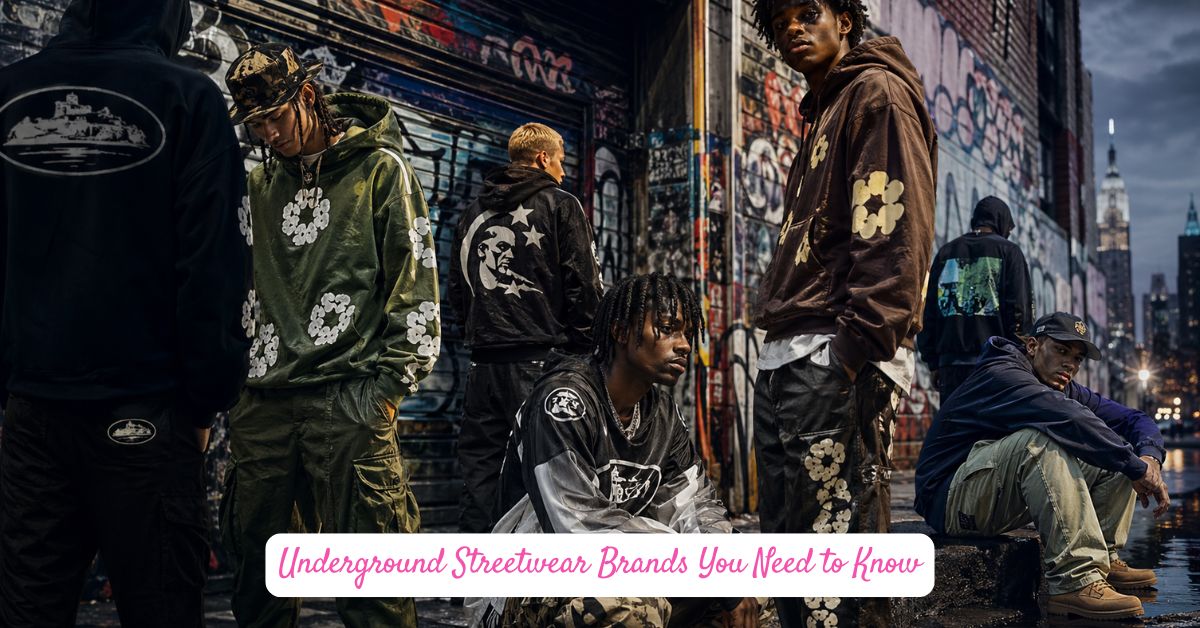
At present, there are many amazing developments in the world of fashion that are unrelated to items being shown on luxury runways in Milan. There are many parts of the globe where real excitement exists! Real excitement exists underground! Always has! Those who are creating culture today are not waiting for fashion week or a magazine editor’s cosign or approval before they begin. They are producing limited runs from their homes, marketing their products via voice notes and secure websites with passwords, and building tight-knit communities so that anyone who wears something that doesn’t belong within their community will be committing a crime of personality. If you have been sleeping on underground streetwear brands, consider this your wake-up call.
The Underground Is Not a Phase, It’s the Foundation
While the industry attempts to portray that they are too cool for big enough, each and every one of these labels/signs started as something nicely unglamourous, very small, and completely unrecognised as being a legitimate ‘business’ option. To use some examples, Supreme began as a skate shop while dudes at Stussy began selling tee-shirts out of some surf shops. Being a label of the underground isn’t just a phase that you eventually grow out of to get to a more mainstream label; its the main reason you created the label and it is still a legitimate label. If you’re still in the underground as of 2026 and fast fashion is imitating any and all aesthetics (from TikTok) within 2-3 weeks of it being launched, then you are flexing because you created a brand that is not capable of being replicated (in a surface level manner) because it is rooted in keeping the brand local vs a content calendar.
Underground streetwear brands are doing something the big houses genuinely cannot replicate: conviction. No investor meetings, no trend reports, no compromising the vision to appeal to a wider demographic. Just the clothes and the culture, period.
Corteiz: The Movement That Became a Brand (And Stayed Itself)
Let’s discuss Corteiz because if you didn’t know about them by 2026 then you’re very embarrassed! Corteiz was started by Clint Ogbenna (also known as Clint419) in London. The entire identity of the business was built on the idea of getting into the industry or staying out of it and doing so through innovative ways like creating password-protected websites, conducting guerrilla-style events such as pop-up shops, and even the way they have launched their Nike collaborations via drone. Corteiz has done campaigns where people literally switched clothes on the street and they took over subway cars in New York and took over clubs in Atlanta for promotions. In 2026, Corteiz will still be dominating with their limited releases selling out the moment they hit websites; their commitment to creating products that feel authentic and exclusive will continue to create products that feel like something truly special.
The Alcatraz logo of Corteiz is a perfect example. It’s not just a logo; it’s a declaration of independence from the establishment. The brand, Corteiz, represents the notion of freedom from the establishment; while that might sound extreme, there are countless brands who spend millions of dollars trying to manufacture that feeling and thousands of people who have tried to achieve it at home. However, Clint has created it organically and people born between 1995-2010 (aka Gen Z) can smell the difference. Central Cee and Dave are not representing their celebrity status in Corteiz’s campaigns, rather they represent people who come from the same background that Corteiz was created from. That matters.
Hellstar: Dark, Loud, and Completely Unapologetic
Corteiz may represent the epitome of style; however, Hellstar embodies a life lived well outside conventional fashion norms. Since its launch, it has grown rapidly through their highly graphic and punk inspired pieces that speak profoundly to those seeking a bold expression of individuality. The brand draws from a combination of apocalyptic imagery, celestial destruction elements, fire motif elements, as well as distorted typefaces, there is absolutely no attempt to be understated with any of these graphic influences. Then there are people who want their hoodies to have come from another dimension, where there are no fashion guidelines and everyone seems slightly crazy.
Why Hellstar Is More Than a Hype Moment
Unlike many of the seasonal edgy-graphic-tee brands that have an unreliable and inconsistent visual language leading to uncertainty by its consumers. All of Hellstar’s drops work together to create a feeling that everything comes from the same place. Identifiable by rappers to skaters to alternative fashion kids, Hellstar has established a very strong identity for itself and the culture that has developed around it. This gives Hellstar’s product authenticity and is an example of how punk energy gets filtered down through streetwear, giving Hellstar additional strength in 2026.
Denim Tears: Fashion as Cultural Memory
Tremaine Emory’s Denim Tears is doing something that almost no other label in the underground streetwear world is doing: using clothes to tell the actual history of Black America. Denim Tears has become a well-known brand for melding together streetwear with a narrative of culture, especially with regard to cultural references related to the African Diaspora, since it was established in 2019. Emory, a former creative director at Supreme, chose to leave that role behind to create his own vision; thus, the Spring/Summer 2026 campaign features a conversation between two icons, Lauryn Hill and Emory, regarding their individual perspectives around the topics of memory, identity, and generational legacy.
Denim Tears offers limited, instant pieces that give you the impression of having an artifact from the past when you wear them instead of just another item of clothing.
Brigade NY: New York’s Best-Kept Secret Going Global
If you aren’t aware of Brigade, you will soon miss out. They had their breakthrough 2025 Fall/Winter collection “Me vs. The Ave.” at New York Fashion Week, which is by far their best collection so far; it included cowichan sweaters with world flags and zip-ups inspired by the famous Jesus piece. Brigade created an impact at Paris Fashion Week without a runway show, and just by having celebrities wearing pillbox hats walking around Paris, everyone was curious where they could get them? That’s not a traditional marketing budget; that’s a strong enough identity and product on their own that it will travel a long way.
In addition, Brigade collaborated with underground New York rapper Wiki and The New York Giants this year; this shows you everything about the diversity within the brand. It is in the midst of borough culture, global fashion obsession, and that downtown NYC vibe that can’t be learnt or imported.
Broken Planet: Sustainability Without the Lecture
Broken Planet by UK has fully earned recognition for accomplishing the hard task of creating a cool sustainable product as opposed to a preaching type of product. The brand uses sustainable principles as part of who they are; entertainers are also multiple forms of celebrities including Jude Bellingham, AJ Tracey, SZA, and Maya Jama supporting the brand out of choice as they have a true sense of style and they also represent something.
What Broken Planet Gets Right That Others Do Not
Sustainability is not seen as a trade-off by the brand in terms of product development. The graphic heavy designs, strong shapes and extremely covetable product fashion have allowed them to understand that Gen Z does not want ethical purchases forced upon them. Gen Z wants to purchase the product they love for the product’s sake and consider it a bonus that they are purchasing the product in an ethical manner. This was the premise of Broken Planet and has allowed them to build a tremendous community surrounding the brand.
Aimé Leon Dore: The Elevated Underground
Aimé Leon Dore was developed by Teddy Santis who draws creativity and direction from the culture of Queens, vintage sportswear, and the multicultural nature of New York City. Aimé Leon Dore is positioned to create an experience for someone who grew up in the world of streetwear and is now looking to elevate their wardrobe to a more upscale level. There is no “sellout” vibe associated with the brand, instead, it is about “growth.” Aimé Leon Dore footwear collaborations with New Balance have been among the most prolific footwear releases over the last ten years, and their lookbooks appear to be more like a piece of art rather than a collection of product images.
In 2026, the brand exists at the crossroads of “underground cred” and true cultural significance, which is one of the more difficult places to achieve in the world of fashion.
What All These Brands Have in Common
Here is the through line across every underground streetwear brand on this list: All of these brands built community before establishing a customer base and have a fixed view of the world regardless of current trends. These brands also know that the people who wear their clothes are not just consumers; they’re part of the story the brand is creating.
In fact, that’s the future of fashion. We’re done with another season of recycled looks and influencer giving away clothes. In five years from now, the only brands that will matter will be those that are already building something authentic; maintaining a small group of people around them; and ensuring that each individual garment is actually meaningful.
A brand that wants to thrive in fashion in 2026 will not be represented by the person who yells the loudest; it will be represented by the person who exudes authenticity. This has always been the essence of the underground.