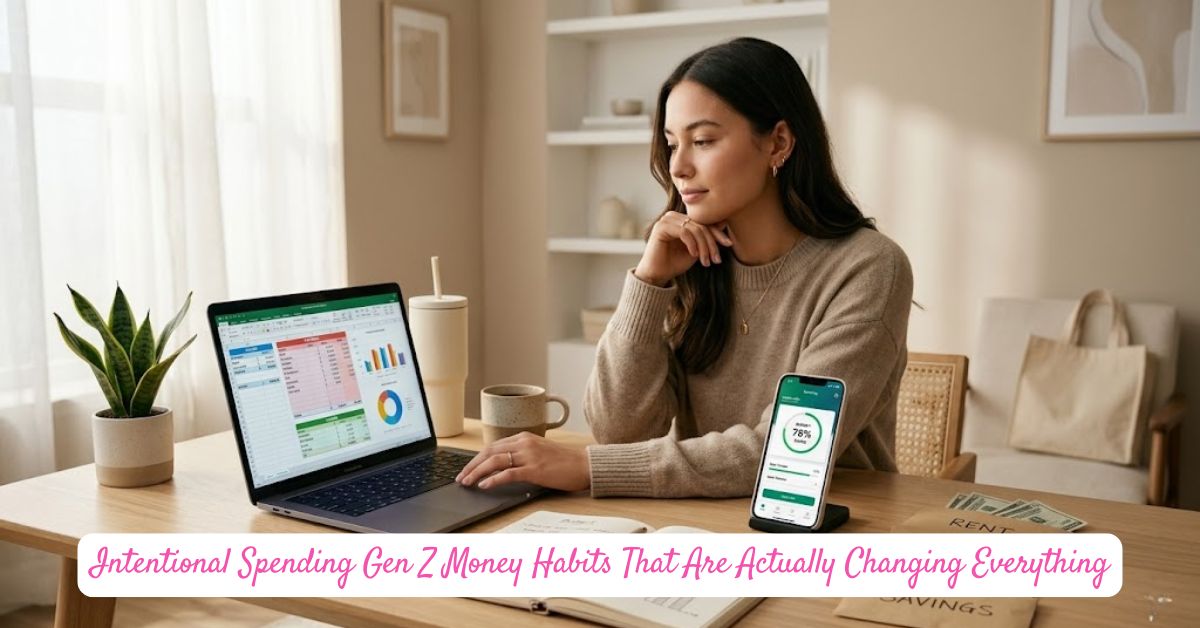
Let’s face the facts. The world of finance that Gen Z entered is nothing like they were told it would be. Rent is outrageous. Inflation is wearing them out. There is real student debt. And somehow, in spite of all of that, there’s still a Zara drop every other week and a new color for the Stanley cup that feels necessary to have. Welcome to being young in 2026.
However, the headline articles continue to get the story wrong about Gen Z. The articles that discuss Gen Z are written in a dramatic fashion and say they are either broke or reckless, and neither version is the real story. Intentional spending Gen Z habits are shifting the entire conversation about money, shopping, and what it even means to treat yourself anymore.
We Are Not Spending Less. We Are Spending Smarter.
It has become increasingly common to assume that Gen Z has stopped spending money completely. People think we sit at home eating rice cakes and will not support capitalism anymore. This is just not true. As per the Consumer Edge research published in January 2026, Gen Z continues to spend money, but they are making extremely thoughtful purchases.
With every purchase made, the decision reflects who you are as an individual, your moral compass, and, quite frankly, a level of familiarity with the culture that previous generations did not have the opportunity to experience growing up.
Gen Z has changed how we shop and spend our money because we have become more disciplined about which purchases are actually worth it to us. This is not frugality; rather it is discernment.
The Era of Buying With Intention
According to data by PwC, Gen Z tends to wait for items to go on sale (over 79% of them) compared to only 21% of Gen Z who usually buy at full price. Calling this “cheap” is incorrect; as a result of looking for discount codes, they have increased their searching by 14%, and browsing has been raised by 17%. This isn’t laziness, but rather a form of strategy. Intentional spending for Gen Z occurs when they search for the correct item at the best price instead of simply purchasing anything because it was shown by an algorithm, indicating that they “needed” it.
Furthermore, Gen Z has begun to utilize AI tools for finding discounts as well. Searching for the best valued mascara or cheaper options for trending bags will be standard practice in 2026; no one is going to be embarrassed about doing so.
Loud Budgeting Changed the Way We Talk About Money
A number of years back, when telling somebody at brunch that you couldn’t afford to go out (even if you really couldn’t) felt like a social death sentence, you’d be more likely to swipe your card, knowing it was already within an inch of maxing out, than actually own up and let other people know you were watching your bank account, as though it owed you something.
Then came loud budgeting, thanks to TikToker Lukas Battle for coining the phrase!, which once again resonated with an entire generation who had been too embarrassed or ashamed to admit that they were on a budget. Now you can tell friends you’re being fiscally responsible; you can decline going to an expensive restaurant or a group vacation; you can even opt out of lunch with friends who plan to split the check evenly amongst all attendees (even though you had a water and salad). Best of all: you can actually say no, and that’s okay!
Why This Is a Bigger Deal Than It Sounds
Currently, approximately 38% of Gen Z individuals report being very comfortable indicating that they are unable to attend events they cannot financially manage to attend – this is an impressive transformation. Money shaming has existed for numerous years, and it truly is a remarkable event that a generation is verbally saying out loud, “I prefer saving money rather than being socially pressured into attending social events I cannot afford.”
According to the Wells Fargo 2026 Money Study, approximately 90% of all American adults wish to be more intentional and thoughtful in their spending habits – an increase of approximately 84% from two years prior. For Gen Z, specifically, this shift of mindset is impactful because they are undergoing the process of cultivating their financial habits for the very first time.
Soft Saving Is Not a Cop-Out
It’s time to get serious. There’s a new trend that is unsettling for many financial experts because it lacks strictness in discipline and is referred to as “soft saving.” The concept behind “soft saving” is essentially to create an emergency fund while also funding your obligations, but to also allow yourself small pleasures along the way.
For example, you would avoid spending your entire paycheck on festival tickets and matching outfits, but you also wouldn’t deny yourself every single pleasure of life until some imaginary future version of you is allowed to experience the joy of living. You would budget for bubble tea. You would plan for an inexpensive trip. You would treat yourself occasionally without destroying everything you’ve worked for.
There is nothing irresponsible about “soft saving.” In fact, it can be argued that it’s much more sustainable than having strict discipline. And intentional spending Gen Z habits are rooted in sustainability more than anything else.
Billie Eilish and the Anti-Haul Mentality
There has also been a shift towards this sustainable style of slow fashion within the art community. Billie Eilish has frequently talked about sustainability in the fashion world and how it contributes to overconsumption, which resonates with the younger generation of Gen Z. Anthony Rodrigo gained a following based on his thrifted/vintage aesthetic, which communicates what this generation values; spending money on items that last, have meaning, and fit their personal identities rather than just current trends.
The de-influencing movement on social media resulted directly from Gen Z creators posting videos informing their audience not to purchase viral products, choosing honesty over commission; demonstrating that a generation cannot just scroll mindlessly and hit “add to cart.”
Cash Stuffing in a Digital World
One of the more surprising trends that has received a broad resurgence is cash stuffing. Yes, that’s right; physical cash is put into physical envelopes labelled as: rent, groceries, fun, savings etc. Cash stuffing may sound like something from your grandmothers recipe book but it truly has become a trend on TikTok and Instagram because it is able to achieve what a modern budgeting application cannot always do.
The Money feels real.
When you swipe your card or tap your mobile there is no tangible connection to your spending, it’s an abstract thought. When the envelope labelled as ‘fun’ is empty it is empty, no one can do any accounting tricks, no one can say, “hey I will work it out later”; and the visual boundries are right there in front of you and fit perfectly into the organization/content aesthetic that Gen Z are consuming with vigour.
The Anxiety Underneath All of It
It’s unwise to believe these cute trends and all this financial empowerment doesn’t have some type of real stress underneath it. According to a Wells Fargo 2026 survey, 57% of Gen Z adults said they could go less than three months without a paycheck after losing their job – that’s scary. There are also currently approximately 31% of Gen Z adults employed are actively concerned about losing their jobs at the moment – which is twice the rate of the general population that gets up to go to work each day.
Intentional spending Gen Z habits are not coming from a place of abundance and choice alone. The current generation is one filled with real fear about where they will be in the next few years and how they will create a stable environment when the opportunities around them have not been made available for them to do so.
50% Of Gen Z is receiving financial help from family, most feel that they do not understand how to invest, buy a house, or save for retirement, and these should not be blamed on them personally. These are things that are happening as a result of systems that are in place. That Gen Z has started responding to this by becoming much more thoughtful, more outspoken, and more purposeful with their purchasing decisions is very commendable, and should not be seen as a point of ridicule.
What Intentional Spending Actually Looks Like in 2026
So what does this look like in practice? It looks like hey, I’m gonna buy one really awesome bag instead of five average ones… It looks like I’m choosing to go vintage because it’s cheaper and more unique… It looks like I’m asking myself if I genuinely like something or if I just bought it because of what the internet told me I should want… It looks like I’m telling myself “no” to the third round of drinks because paying my rent/taking care of responsibilities is more important than appearing as though I’m super free-spirited on a Tuesday.
It looks like Doja Cat wearing vintage pieces on the red carpet while somehow making it feel more aspirational than a brand-new designer outfit… It looks like Sabrina Carpenter created her personal style through thrifted Y2K items, rather than purchasing them at retail locations… It looks like everyone at a party wants to be seen as stylish, but those who truly stand out had the forethought to think about what they wore before leaving home!
The generation who witnessed their parents struggle during The Great Recession of 2008 only to find themselves starting their careers in the middle of COVID-19 and a cost-of-living crisis are going to be responsible spenders. Data supports this; culture supports this; and quite frankly, logic supports this!
The Future of Gen Z and Money
Next, Gen Z’s connection to currency will become even further refined and complex. As AI solution implementations ease deal-finding, as a growing de-influence of things leads to less overconsumption, and more real financial understanding by this generational cohort outside formal institutions will simultaneously build out a new generation of habits that will ultimately create an entirely different retail experience.
Brands that don’t provide genuine insight and real consumer value will fail. The traditional hype marketing model is long gone; with this generation, you must now research, compare & wait as much based on their values & the practicality of what they’re doing with their money than solely because you have presented marketing to them.
Intentional spending Gen Z habits are not a phase. They are not a vibe shift that will correct itself when the economy feels easier. They are the new standard, built by a generation that learned early that no one is coming to save them financially, so they might as well build something real for themselves.
And honestly? That is the most style thing of all.