For decades, society assumed that skin breakouts were an uncomfortable rite of passage limited strictly to adolescence. In the mid-twentieth century, medical science documented how stress, hormonal shifts, and environmental toxins trigger severe adult skin inflammation well into our thirties and forties.
When persistent flares appear later in life, applying teenagers’ drying treatments only worsens deep tissue irritation and accelerates collagen loss. Partnering with a qualified dermatologist allows you to address internal hormonal pathways and cellular recovery rather than relying on harsh topical scrubs. Understanding how adult tissue responds to systemic shifts keeps your complexion clear while protecting long-term elasticity.
The Biology of Adult Hormonal Inflammation
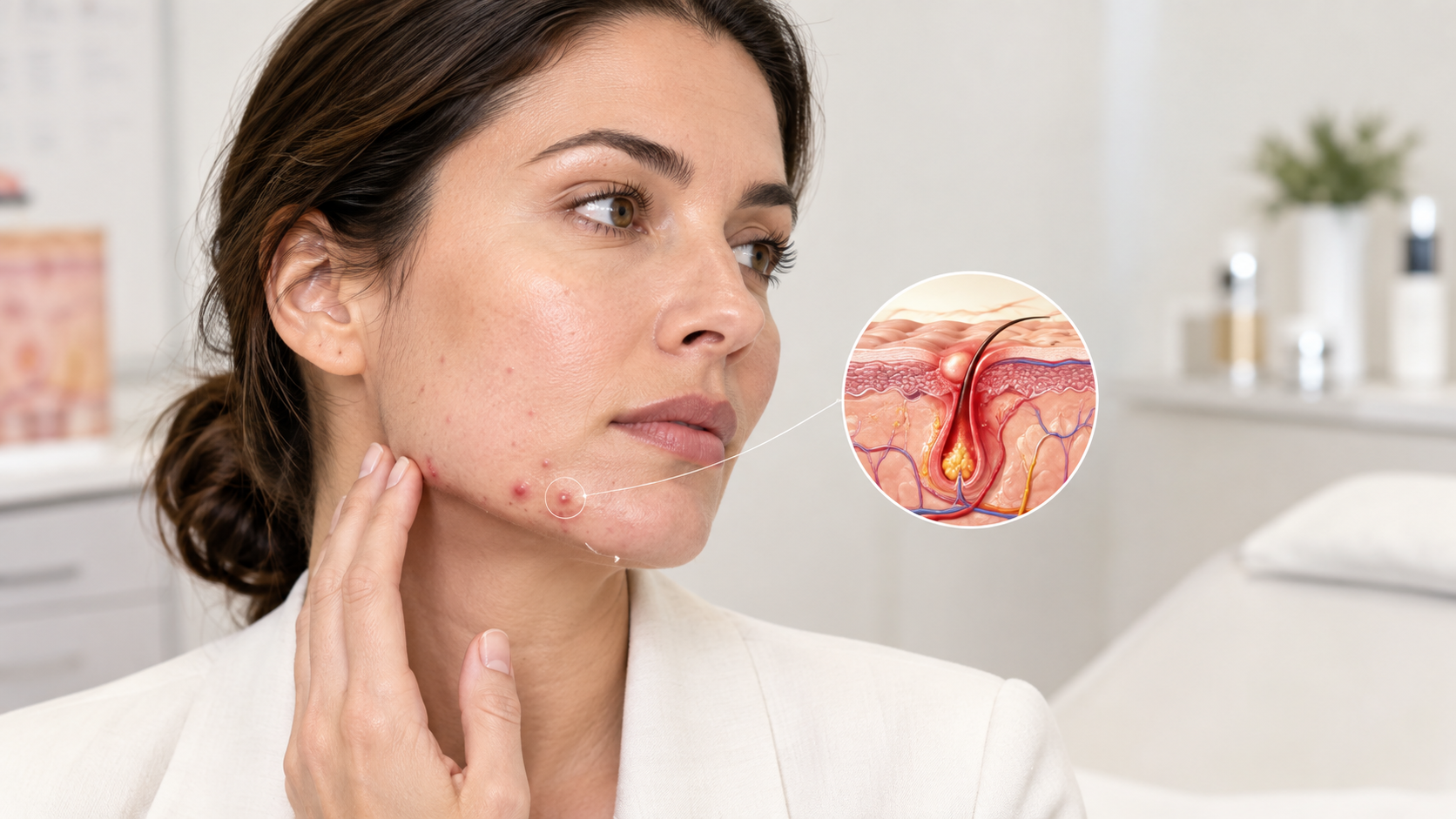
Adult skin behaves differently from adolescent skin because cellular turnover slows down as we age. While teenage breakouts stem from excess surface oil, adult flares originate deep within the dermis along the jawline.
As estrogen levels shift relative to androgen hormones, oil glands produce thicker sebum deep inside the pore structure. This dense oil gets trapped where surface washes cannot reach, creating tender nodules rather than simple surface whiteheads.
The High Cost of Spot Drying
A common and costly mistake adults make is spot-treating deep hormonal cysts with harsh alcohol drying lotions. People fall into this trap because drying out a surface pimple during adolescence brought quick relief.
In adult skin, harsh drying agents strip healthy surrounding tissue without penetrating the deep cyst underneath. This unnecessary irritation damages the lipid barrier, causing severe redness and leaving behind dark marks known as post-inflammatory hyperpigmentation. Fixing these dark scars requires months of expensive brighteners or laser treatments that cost far more than the initial breakout.
The Oral versus Topical Trade-Off
Standard beauty guides suggest buying stronger antibacterial washes when adult breakouts appear. The non-obvious trade-off is that surface washes only kill bacteria on the outer skin layer while ignoring internal hormonal drivers.
Relying entirely on strong topicals forces you to accept chronic dryness and peeling while your body continues producing dense sebum underneath. Systemic treatments work by regulating androgen receptors at the cellular level, resolving the root cause of deep cysts without stripping your water barrier.
Real Numbers in Anti-Inflammatory Care
Let us look at a concrete worked example comparing over-the-counter spending against targeted clinical care over twelve months. Consider an adult who spends 75 pounds every month on heavy concealers, spot correctors, and soothing serums to hide recurring jawline cysts.
That trial-and-error approach costs 900 pounds a year while leaving deep inflammation active. By contrast, a three-month targeted clinical plan costing 280 pounds resolves androgenic oil production at the cellular source. Addressing the root cause saves 620 pounds annually while preventing permanent collagen degradation and scarring.
Guidelines for Managing Adult Flares
Managing adult skin inflammation requires making consistent, low-friction changes to your daily personal care routine:
- Never squeeze subterranean nodules: Pressing down on internal cysts ruptures follicle walls underneath, spreading inflammation deeper into the dermis.
- Prioritise barrier-repairing moisture: Use non-comedogenic moisturisers rich in ceramides to keep your outer water shield intact during treatment.
- Apply broad-spectrum sunscreen daily: Shield healing tissue from ultraviolet light to stop inflammatory spots from turning into dark permanent scars.
A Clear Rule for Flare Diagnostics
You do not need a medical degree to know whether your skin condition requires systemic care or basic home adjustments. You can apply a simple decision rule based on where and how your flares form.
If your breakouts appear as small surface bumps across your forehead that clear up within four days of gentle cleansing, basic home care is fully sufficient. If your flares form as deep, tender knots along your jawline that persist for over two weeks, stop using drying lotions and seek a medical evaluation immediately.
Navigating adult skin changes is ultimately about understanding how internal biological systems interact over time. By looking past teenage drying habits, addressing deep hormonal triggers directly, and protecting your skin’s natural barrier, you maintain both long-term clarity and structural strength. Approach your personal health with patience, rely on solid clinical facts, and move forward with quiet confidence in your care plan.