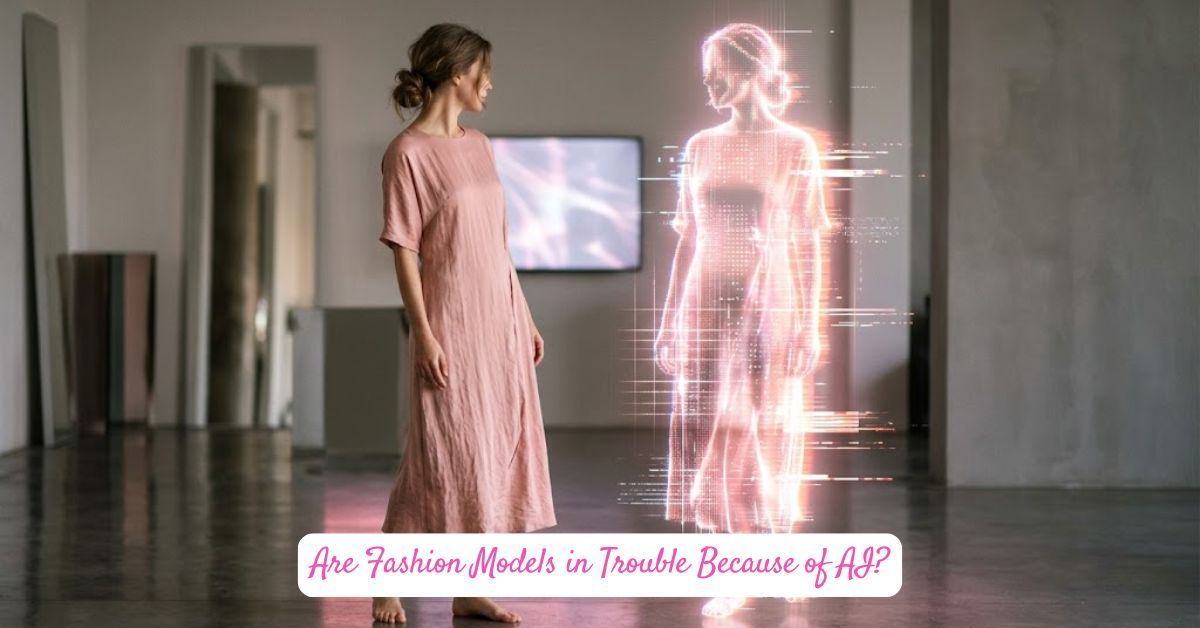
Although the fashion potentially has been a field where the change occurs quicker than the change of clothes of a runway model does, nothing could have prepared us the tectonic shift that the industry currently is experiencing. AI fashion models are no longer just a futuristic concept – they are here, they are gorgeous, and they are causing traditional models to question whether their Instagram feeds could be made up of their new portfolios.
Being absolutely honest, we are in a time where your cell phone can turn you into the most beautiful supermodel by applying one Instagram filter, and thus it should not be surprising that technology has grown to a stage where you can now develop an entire digital human being that will never have bad days in terms of hair, will never be too tired to work a 12-hour shift, will never once mention the craft services table.
The Rise of Digital Divas
AI model for clothes has become more than just a trendy phrase thrown around at fashion tech conferences. Large brand names are already playing with this technology like a fashionista has found a sample sale. Fashion retailer such as Levi has collaborated with AI applications to develop various types of digital personalities, and luxury associations are trying out AI-driven virtual appearances that could put on their new looks without ever entering a dressing room.
The technology of such digital models has changed radically since 2023. Today’s AI clothes model can be customized to represent any demographic, body type, or aesthetic vision a brand desires. Need a specific-measure model? Done. Desire a person of a certain cultural orientation? Consider it handled. Control over how they are actually visualized is unprecedented.
The Economics of Digital Beauty
Here’s where things get interesting – and a bit concerning for traditional models. Creating an AI fashion model costs significantly less than organizing a traditional photoshoot. No transportation cost, no food cost, no wardrobe cost and certainly no requests by divas. One AI-trained model can be applied in many campaigns, seasons or even in several years without aging one day without needing a promotion.
The cost-efforts are mindblowing. An average fashion photoshoot may put up a cost of between 10,000 and 100,000 dollars depending on the model, photographer and size of production. Meanwhile, AI models for clothing can be generated for a fraction of that cost, with the added benefit of unlimited revisions and perfect consistency across all marketing materials.
The Creative Revolution in Fashion Design
AI fashion design software has opened doors that traditional methods kept firmly locked. Now, designers are able to represent their designs on hundreds of variations of body and skin tone without creating logistical nightmare of castings and arranging different models. The same technology is inclusive in its representation and also consumes less of time and money compared to the conventional design procedure.
The layout has gone a notch higher and it is now capable of taking into consideration a fold of fabric, lighting and even the change in seasons of styling. Designers have an opportunity of testing with human models with a bold idea which would otherwise be too dangerous or too expensive to use human models in the initial run. It is a kind of having an indefinite wardrobe and unlimited modeling company in your hands.
The Human Element That Cannot Be Replicated
But with all such technological progress, human models still have certain irreducible features that AI has not been able to so far entirely learn. The nuance, the natural movement, even the real feeling that a person would have in owning and feeling the clothes all these things have their part in giving traditional concept models a considerable advantage.
AI fashion models might be perfect in terms of proportions and consistency, Yet they are short of spontaneous moments that bring to life the most memorable fashion imagery. That natural laugh, how cloth skates with natural body language or even the sheer confidence that oozes out of one person who loves what they are wearing, these are the intangibles that keep human models pertinent.
Industry Adaptation and Hybrid Approaches
Instead of doing away with human models, a good number of brands are going the hybrid way. They base their clothes on AI model in Design concept, Size testing, and also in Cost-effective campaign variations even though still they use human models in hero shots, editorial content, and brand story-telling, which demand genuine emotional interest.
A blend of these strategies will enable the brands to achieve maximum savings despite their efficiency in budgetary allocation but retain the human touch that clients cannot still do without. Cases of campaigns incorporating AI-created models as the technical products shot do seem appear increasingly common, with the human models featured in the lifestyle content and emotive branding content.
The Future Landscape of Fashion Modeling
Looking toward 2025 and beyond, the relationship between AI clothes model technology and human models will likely become more collaborative than competitive. An AI-human hybrid photoshoot, in which digital technology boosts human models and does not entirely substitute them, is already appearing.
The future models which can adjust to working in tandem with AI technology will be the most successful, and it is possible that certain forms of commercial activity will have their own digital twins. Consider it as possessing an online body sin version that can carry out 24/7 whilst the human version is concentrated on high valued and emotional campaigns.
Challenges and Ethical Considerations
The rise of AI models for clothing isn’t without controversy. Concerns regarding body image, genuineness of advertisement and possible employment replacement of human models are valiant concerns that the industry must put into considerations.
It has also got the issue of diversity and representation. Whereas AI theoretically has the ability to generate more inclusive imagery, there is a danger of algorithms building on the current standard of beauty, or it can spawns new types of online discrimination. The fashion industry has a responsibility to ensure that AI fashion design software is used to enhance diversity rather than limit it.
Practical Implications for Aspiring Models
To people who always aspire to become models, this technological change is not a death knell in favor of them it is a technological transition that denotes development. The best-selling models are the ones that are able to provide what AI lacks in authentic personality, professional flexibility and encourage audience engagement at a more human level.
Models that are also capable of comprehending and collaborating with AI technology, possibly even aiding to educate or hone AI garments styles, will experience a heavy demand. Those who are able to provide the transition between the creativity of people and artificial intelligence should have a future.
The Bottom Line
Do fashion models have a problem due to AI? The frank response is: certain elements of the old modelling process will certainly evolve, though the industry is not going away in the near future. AI fashion models represent a powerful tool that’s reshaping the industry, but they’re not the final word in fashion imagery.
The brands that will thrive are those that use AI model for clothes technology to enhance their creative possibilities while still honoring the irreplaceable value of human authenticity. Majoring on the developments in the world of fashion in 2026 we will find ourselves led to believe that the industry may be in more diverse and efficient than we have never imagined before and at the same time both artificial intelligence and human talent will play prominent roles in guiding the world of fashion. The issue is not whether AI is going to substitute humans models but directions on how the industry has to change to make the best of both worlds work. And honestly? That is a pretty exciting future I am looking at.