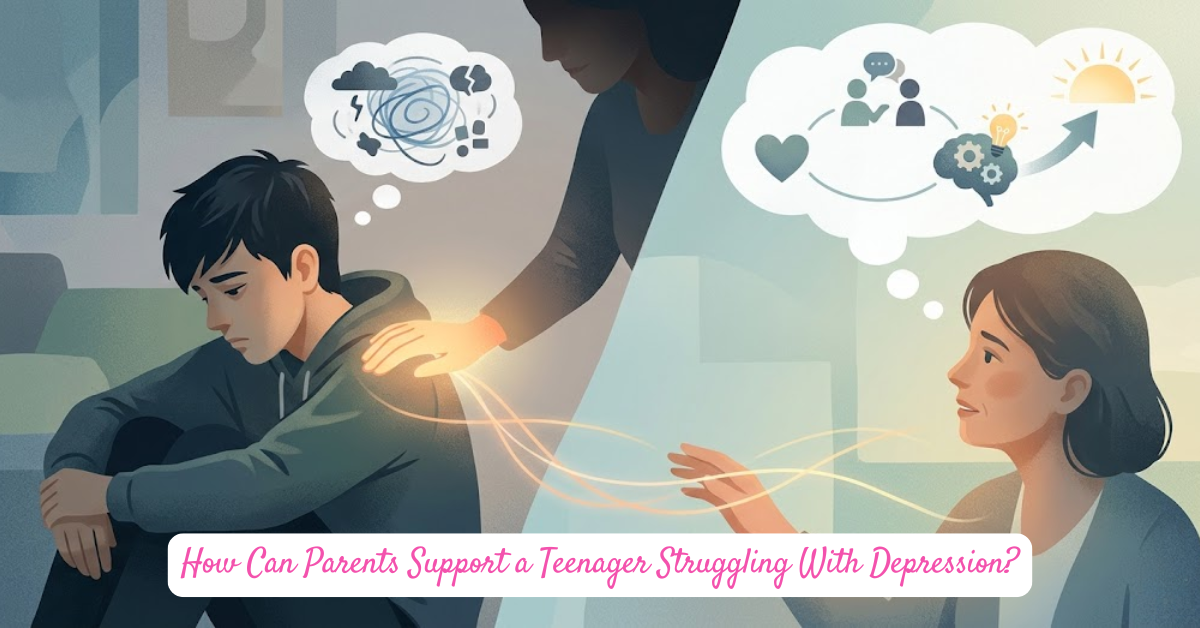
Watching your child struggle with depression is one of the hardest experiences a parent can face. You may notice that something feels off, that your once-energetic teenager now seems distant, irritable, or just not themselves. Yet you might not know what to say, what to do, or where to start. The good news is that your involvement matters more than you realize. Research consistently shows that teens with supportive parents recover faster and more fully. This guide walks you through how to recognize the signs, understand the causes, start real conversations, build healthy habits at home, and get the right professional support.
Recognizing the Warning Signs of Teen Depression
Teen depression does not always look the way adults expect it to. Rather than sadness, many teenagers express depression through anger, frustration, or emotional withdrawal. If you’re thinking, my teenager is depressed and needs help, the first step is learning to recognize what that actually looks like in a young person. You may notice changes in sleep, appetite, school performance, motivation, or the way they interact with family and friends. These signs can be easy to mistake for normal teen behavior, but when they last for weeks or begin affecting daily life, they deserve serious attention.
Emotional and Behavioral Changes to Watch For
One of the most common signs is a sharp change in mood that lasts more than two weeks. Your teen may seem persistently sad, hopeless, or emotionally flat. They might lose interest in activities they once loved, pull away from friends, or stop engaging with family. Increased irritability and sudden emotional outbursts are also frequent signs, especially in teenage boys, who are less likely to express sadness directly.
Physical Symptoms That Often Go Unnoticed
Depression affects the body just as much as the mind. Watch for changes in sleep patterns, such as sleeping far too much or struggling to sleep at all. Unexplained fatigue, changes in appetite, frequent headaches, and stomach problems without a clear medical cause can all be physical signs of depression. These symptoms are easy to dismiss as typical teenage behavior, so it is worth paying close attention.
How Teen Depression Differs From Adult Depression
Adult depression often presents as prolonged sadness or low energy. In teenagers, it tends to look more like irritability, academic decline, social withdrawal, or risky behavior. Your teen may not even identify themselves as depressed, which is exactly why your ability to recognize these signs from the outside is so important.
Common Causes and Risk Factors Behind Teenage Depression
Understanding why your teenager is struggling can help you respond with empathy rather than frustration. Depression in teens rarely has a single cause. Instead, it typically results from a combination of biological, psychological, and environmental factors.
The Role of Genetics and Brain Chemistry
If depression or anxiety runs in your family, your teenager has a higher risk of experiencing it too. Brain chemistry plays a significant role, particularly in how the brain regulates mood through neurotransmitters like serotonin and dopamine. These are not character flaws or parenting failures. They are medical realities that deserve the same attention as any other health condition.
Social Pressures, Trauma, and Life Events
Adolescence is already a period of intense social comparison. Add academic pressure, bullying, social media, or the aftermath of trauma, and the emotional load can become overwhelming. Major life changes, such as a divorce, a move, a breakup, or the loss of someone close, can also trigger depressive episodes in teenagers who may not yet have the emotional tools to process grief.
How Home Environment Affects Teen Mental Health
The atmosphere at home has a direct impact on your teenager’s mental health. Ongoing conflict, emotional unavailability, or high parental stress can deepen feelings of isolation and hopelessness in a depressed teen. On the other hand, a home environment built on open communication, warmth, and emotional safety can serve as a genuine protective factor against depression.
How to Start the Conversation With Your Teen
Many parents know something is wrong but feel unsure about how to bring it up without pushing their teenager further away. The truth is, the conversation does not need to be perfect. It just needs to happen.
Choosing the Right Time and Setting
Timing and environment matter more than you might think. Avoid confrontational moments or times of high stress. Instead, try a low-pressure setting, such as a car ride or a walk, where there is no direct eye contact and no sense of being cornered. These relaxed moments often make it easier for teenagers to open up without feeling interrogated.
What to Say and What to Avoid
Start with specific observations rather than accusations. Say something like, “I’ve noticed you seem really tired lately and not yourself. I’m here if you want to talk.” Avoid minimizing phrases like “just cheer up” or “you have nothing to be sad about,” as these can make your teen feel misunderstood and less likely to share. Your goal at this stage is to listen, not to fix.
Keeping the Door Open After the First Talk
One conversation is rarely enough. Let your teenager know that they can come to you again, without judgment or overreaction. Follow up gently in the days after, not with pressure, but with small, consistent reminders that you are present and paying attention. This ongoing availability builds the trust your teen needs to eventually let you in.
Healthy Parenting Habits That Make a Real Difference
Supporting a teenager with depression is not just about what you say during difficult moments. It is also about the daily habits and environment you create at home. Small, consistent actions can have a surprisingly powerful effect on your teen’s recovery.
Building Routines Around Sleep, Nutrition, and Physical Activity
Structure is genuinely therapeutic for teenagers with depression. A consistent sleep schedule supports mood regulation, since sleep deprivation significantly worsens depressive symptoms. Nutritious meals fuel brain function and emotional stability, while regular physical activity has been shown in multiple studies to reduce symptoms of depression in adolescents. You do not need to overhaul your family’s lifestyle overnight. Start with one manageable change, like a consistent bedtime or a shared walk a few times a week, and build from there. These routines give your teen a sense of predictability and control during a time that may feel chaotic to them.
Reducing Sources of Stress at Home
Take stock of what your household environment looks and feels like on a typical day. If there is frequent arguing, criticism, or emotional unpredictability, those stressors can actively interfere with your teen’s ability to heal. Set a tone of calm and consistency, even on hard days. This does not mean pretending everything is fine. It means modeling emotional regulation so your teenager learns that difficult feelings can be managed without a crisis.
When and How to Seek Professional Help
Parental support is powerful, but it has limits. There are situations where professional help is not optional: it is necessary. Knowing how to access that help is part of your role as a supportive parent.
Signs That Professional Intervention Is Needed
If your teenager talks about feeling worthless, expresses hopelessness about the future, or makes any reference to self-harm or suicide, seek professional help immediately. Do not wait to see if it passes. Other indicators that professional support is needed include depression that has lasted more than a few weeks, a significant decline in school performance, complete social withdrawal, or symptoms that are getting worse rather than better.
Types of Mental Health Support Available
A good starting point is your teenager’s primary care doctor, who can rule out physical causes and provide referrals. From there, options include individual therapy, such as cognitive behavioral therapy, which has strong evidence for teen depression, as well as family therapy and, in some cases, medication. Each path depends on your teen’s specific situation, so a qualified professional should guide that decision.
How to Support Your Teen Through Therapy
Your job does not end once therapy starts. Stay involved by attending parent check-ins if the therapist provides them, respecting your teen’s privacy, and reinforcing at home what they work on in sessions. Show genuine interest without pressure. Let your teenager know that getting help is a sign of strength, not weakness, and that you are proud of them for taking that step.
Conclusion
Supporting a teenager with depression takes patience, consistency, and a willingness to show up even on the hard days. You do not need to have all the answers. What your teen needs most is to feel seen, heard, and loved by someone who is not giving up on them. Start with the steps in this guide, trust your instincts as a parent, and do not hesitate to reach out for professional support. Your effort genuinely makes a difference.