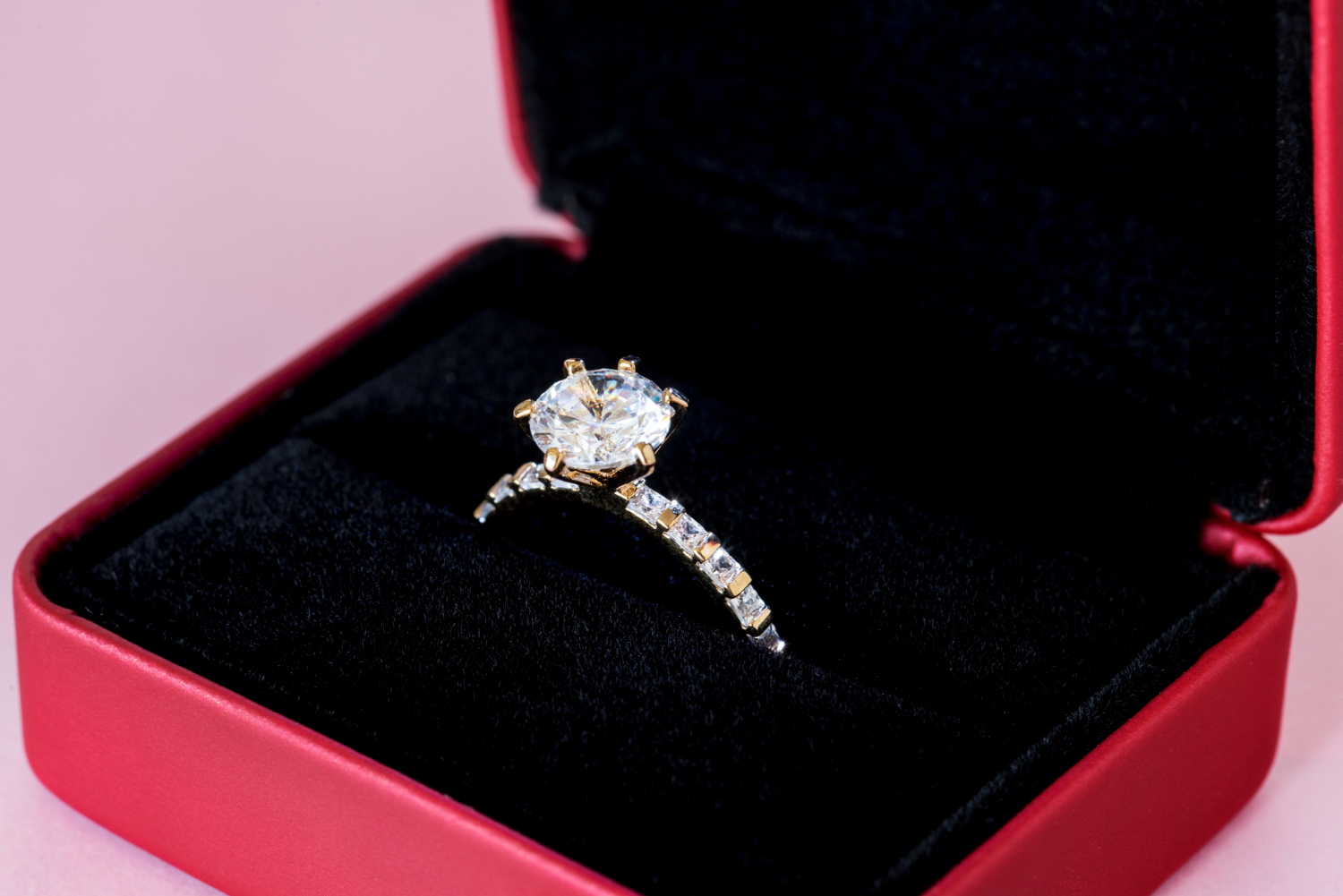
The name stamped inside the band changes what a ring is worth on the day it leaves the store, and it changes that figure by more than the quality of the stone does. Two rings holding equally graded 1.5 carat stones in equally good platinum can return 80% and 30% of their original price to two different sellers, and the difference is almost entirely the mark on the inside of the shank. Anyone treating a ring as a store of value should know which tier they are buying into before they sign.
The Retail to Resale Gap
A retail price includes the stone, the metal, the labor, and a large block of costs that vanish the moment the transaction closes. Rent on a flagship address, staff, advertising, packaging, and the seller’s margin are all inside the number on the receipt, and none of them survive into the secondary market. A second buyer pays for the object alone.
That is why an unbranded piece, however well made, tends to settle close to the value of its materials. A jeweler buying it back is purchasing gold by weight and a stone that must be resold at wholesale, so the offer covers those two components and very little else. Branded pieces escape that floor only when a second buyer wants the specific brand badly enough to pay above the value of the parts.
State the size of that gap plainly at the outset of any purchase. A ring bought at $12,000 that returns $5,000 has behaved exactly as jewelry behaves, and a buyer who knew the figure in advance is far less likely to feel cheated by a fair offer years later.
Brand Tiers on the Secondary Market
The top tier holds its value close to retail, which puts it in a different category from the rest of the market. Van Cleef and Arpels retains roughly 60% to 80% of retail across its core collections, and its most sought-after Alhambra pieces, especially vintage and malachite examples, sometimes exceed their original retail price entirely. Cartier is in a similar range with better liquidity, since broad name recognition means a piece finds a buyer faster even at a comparable percentage.
Tiffany is in the tier below, though the published figures disagree. Some dealers quote 50% to 70% of retail for pieces in good condition with papers, while others report engagement rings changing hands nearer 40%, and the spread comes down to condition, collection, and the survival of the original documentation. Below that, designer names without international recognition perform close to unbranded goods.
Recognition is the mechanism underneath all of these tiers. A dealer quotes against the pool of buyers who will actively search for a maker by name, and that pool is measured in tens of thousands for the top houses and in dozens for a respected regional designer. Quality of workmanship does not change the size of that pool.
Cut Selection and Secondary Demand
Shape moves resale as much as metal does. Rounds sell fastest because demand for them is constant. A princess cut diamond ring trades in a thinner pool, since the shape peaked in the early 2000s and the supply of used stones is large relative to the number of current buyers.
Emerald and cushion stones are in between. The effect shows up in time on market, where a shape with steady demand finds an offer in weeks while one out of fashion waits months for the same percentage.
Documentation and Its Effect on Price
A laboratory report from a recognized grading body is the single cheapest thing a seller can hold. Without one, a buyer has no straightforward way to tell what they are holding, and the discount applied for that uncertainty is usually larger than the cost of grading the stone would have been. A report tied to a laser inscription on the girdle removes the argument entirely, since the stone can be matched to its paperwork in a minute.
Original packaging and receipts matter for branded pieces specifically, and so does a documented service history. A boxed Cartier with its certificate and a documented service history sells for measurably more than the identical ring arriving loose in an envelope, because the second one requires authentication before anyone will quote on it. Keep the paperwork somewhere separate from the ring box that travels with the piece.
Laboratory-Grown Stones and the Resale Floor
Laboratory-grown material has no meaningful secondary market, and the reason is production capacity. Wholesale prices have fallen every year since tracking began, dropping 26% across 2025 alone, which means a stone bought at retail in 2020 competes against new material selling for a fraction of what it cost. Sellers routinely recover 10% to 20% of what they paid, and some recover nothing beyond the metal.
Laboratory-grown stones remain a sound purchase for a buyer who wants maximum size for the money and has no intention of selling, since resale never enters that calculation. The error is buying one while assuming the resale behavior of a natural stone.
Metal, Melt Value, and the Floor Under Everything
Every piece has a hard floor equal to the scrap value of its metal, and that floor has risen sharply as the price of gold has climbed. Platinum and 18 karat settings hold more of that floor than 14 karat, and a heavy shank is worth more scrapped than a delicate one.
For unbranded goods the floor is often the whole story. For branded goods it rarely matters, since the brand premium keeps the piece well above scrap for as long as the luxury brand stays desirable.
Selling Channels and Their Costs
The channel decides how much of the market price reaches the seller. An outright buyback from a dealer is immediate and pays the least, usually because the dealer must resell at a margin. Selling on consignment through a specialist pays more and takes months, with commissions commonly between 20% and 40%. Auction suits pieces with strong provenance or signed work, though a seller’s commission comes off the hammer price and a reserve that goes unmet returns the piece unsold.
Private sale returns the most and demands the most, since the seller handles authentication, payment risk, and negotiation without support. Anyone selling a five-figure piece should price at least two channels before committing to one.
Timing has a small effect. Demand for secondhand jewelry rises modestly in the fourth quarter and again before spring, though the swing is only a few percentage points, which rarely justifies holding a piece for 6 months.
Set expectations against a single figure before buying. A branded ring from a house with international recognition, sold with its papers through consignment, returns somewhere between 50% and 70% of what was paid for it. The factors above move that number by 10 or 15 points in one direction or the other. A buyer who can live with that figure should buy without a second thought. A buyer who finds it alarming has learned something useful before spending the money, which is a better time to learn it than a decade later.