Working with ugly and plastic Kylie wont help your brand, she is no longer relevant anymore. But he who tells Alo.
So now let’s imagine this. One day you’re wearing your leggings while on a Target rack and the next day you see your favorite influencer, your co-worker, Hailey Bieber with coffee, your cousin who doesn’t even do yoga, wearing the exact same leggings, but with a little tree logo on them. That’s Alo. It simply materialized, hijacked your For You page and now charges $118 for leggings that resemble the ones you had five years ago, but everyone is in desperate need of them. You know, the whole “why is Alo so popular?” thing, it’s no coincidence. Brands don’t grow to this size by chance; they grow to this size by design and here are the reasons behind it.
A Quick and Honest History of Alo Yoga
Alo was not created in a lab by a committee in some big company to “disrupt activewear.” It began in 2007 in LA, and was started by childhood pals Danny Harris and Marco DeGeorge, who have been running a screen-printing apparel business since the early nineties. Harris suffered from anxiety while DeGeorge was recovering from a back injury and they found yoga to be helpful, so they created a brand around it.
The part that people don’t mention is that Alo was online-only for nearly 10 years before it hit it big by opening its first brick-and-mortar location in Beverly Hills in April 2016. It has created its identity based on a content and community-first philosophy, rather than a retail-first one. Instead, Alo started out the opposite way from the very beginning: wellness as a way of life, not just a workout. Lululemon wanted to have been your gym outfit. I wanted to be a part of you, Alo.
Breaking Down Alo’s Actual Marketing Strategy
Lots more things in motion with Alo’s marketing machine than the phrase “hot people wear it, therefore it sells.”
The Celebrity Gifting Game
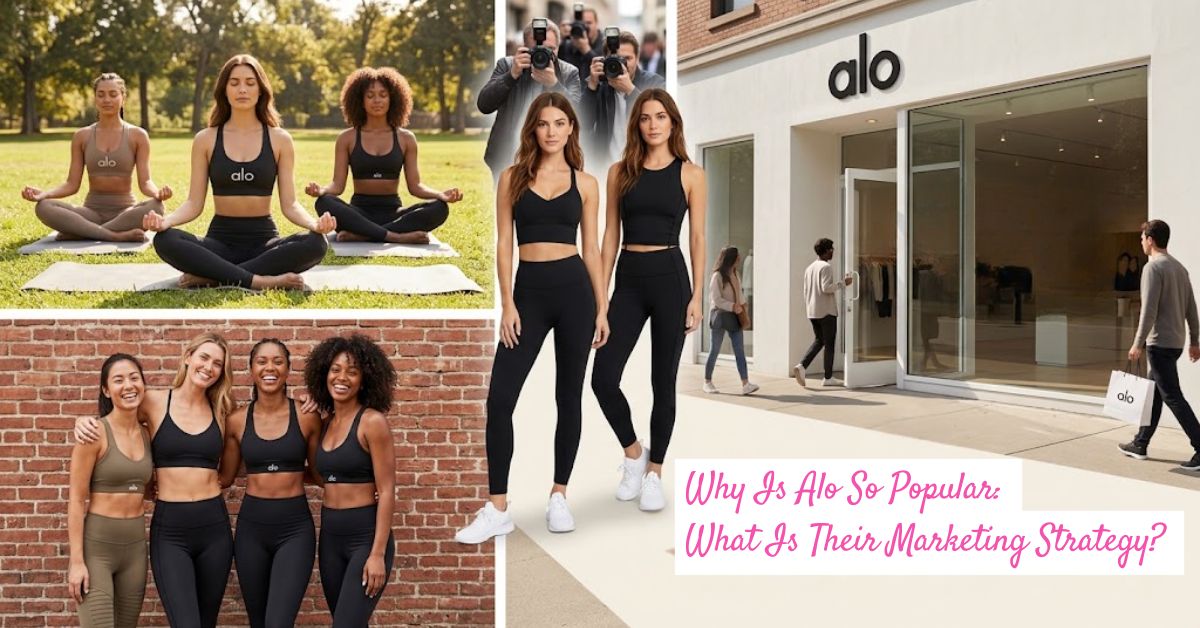
By gifting the product to celebrities and letting paparazzi do the rest, Alo had created its initial hype around the athleisure edition of guerrilla marketing. Out of a coffee shop, a man wearing a hoodie, with cameras around him. It’s low-cost, credible and not a brand paying somebody to say it is “this is what star people wear,” but “this is what star people wear. The whole charm of Alo is the authenticity of it, that’s why is it so popular with people who would normally be allergic to obvious advertising.
Yoga Studio Seeding
Prior to Alo becoming an Instagram phenomenon, it was “the instructor at your studio is wearing it. Sow the good seed in yoga or pilates classes in real studios and have the instructors and regulars wearing the “good seed” in class and making good marks. It’s that grassroots layer that, ahead of its time as a street style staple, lent Alo fitness-world legitimacy.
Influencer Partnerships at Scale
It’s not just a few ads they pay for. Despite its private ownership and youth, Alo is also one of the biggest influencer seeding firms around, reportedly producing tens of thousands of sponsored posts per year on Instagram, TikTok and YouTube, but on par with Lululemon. It’s not just a one and done ad buy, either. That content is then shared in email, on product pages, in-store screens, etc., with one post being multiple assets.
Flagship Stores as Content Studios
Yes, that is a little cute branding, but Alo really does consider its stores to be “sanctuaries. The New York and LA boutiques are like a wellness retreat turned photo studio, with in-store classes and all, too, because they serve as backdrops for content production. You are not just shopping, you are entering a camera roll that has been specifically designed.
The Celebrity Effect: Hailey, Kendall, and the Rest of the Squad
Talking about the reason for Alo’s popularity without the associated celebrity ecosystem is impossible. These are not just random endorsements – it’s Hailey Bieber, Kendall Jenner, Gigi Hadid, Taylor Swift and now Kylie Jenner as the face of a global campaign. By now, Alo has developed a virtuous, almost organic relationship with the very people whose style is being copied by millions each day. The brand doesn’t have to spend millions on an ad during Super Bowl when Kendall Jenner is running errands for them for free in Alo.
Studio to Street: Alo Sells Fashion, Not Just Workout Clothes
This is for the real unlock. Alo didn’t want to be “just” activewear. The brand makes its pieces into what you wear from Pilates to brunch, and errands, and even dinner if you dress it up appropriately. It’s Alo’s “studio to street” mindset that makes him appear in street photos, and not gym selfies. That’s why people that never step into the yoga studio buy in – it’s fashion first, function second.
Okay But Is the Product Actually Good?
Real talk. What is the quality of Alo’s worth what you’re paying for or are you paying for excellent marketing? Honestly, it’s mixed. The Airlift leggings, sweats and hoodies are favorites with reviewers for their softness and durability, but there is also some pilling, sizing inconsistencies and not enough compression in these items for their money, which is particularly true if you compare them to Lululemon. It’s not all smoke and mirrors, there’s a lot of solid fabric depending on the category but you’re also paying a premium for the brand halo, not just the fabric tech.
Alo vs Lululemon: Same Market, Very Different Playbooks
The two comparison is done so often, but few parallels exist between their strategies. It’s Lululemon’s performance credibility first, then their lifestyle appeal. Alo turned that around, starting with aspirational lifestyle and celebrity culture and backing it up with performance credibility. For function, your teacher recommends the brand Lululemon. Your favorite celebrity’s brand is Alo.
Where Alo Is Headed in 2026 and 2027
Alo has no intention of slowing down. It’s surpassed more than 150 outlets worldwide, and is branching out to new markets, such as its first ever outlet in the Philippines, in 2025, and dedicated sanctuary-style flagships in major cities. It is also extended beyond clothing to footwear, skin care, its Glow System line, and experiential wellness – staying within its “wellness lifestyle” narrative so the growth doesn’t seem like something that just happens. A possible sale or an initial public offering has even been discussed, with the company valued at 10 billion dollars.
Long-Term Brand or Just a Hype Moment?
Alo has been developing almost 20 years, but few people noticed. It’s not the typical hype cycle; hype brands pop and go in eighteen months and disappear in twenty-four. In the past two decades, Alo has built up a near 20-year portfolio of celebrity partnerships, studio credibility, retail experience, and content within a single environment – Alo Moves. A brand that is soon to be gone can’t build that infrastructure. The aesthetic may change over time, but the business certainly doesn’t seem like ‘influencers wore it one summer.
The itismandystyle Verdict: Is Alo Actually Worth Your Money?
Honestly? It depends on the purpose for which you are purchasing it. There are some Alo essentials that are just worth it for good everyday basics that will look great and hold up fairly well. Just because it is everyone else using it may lead to a feeling of regret when a pair of $30 leggings can provide the same function when you are exercising. My honest response to why is because it’s not only about selling fabric, it’s about selling a feeling, and so many people feel that way, not just me! Open your eyes when you go in, try on clothing before paying full price, and avoid being swayed by hype into purchasing five identical sets of clothing you didn’t need.