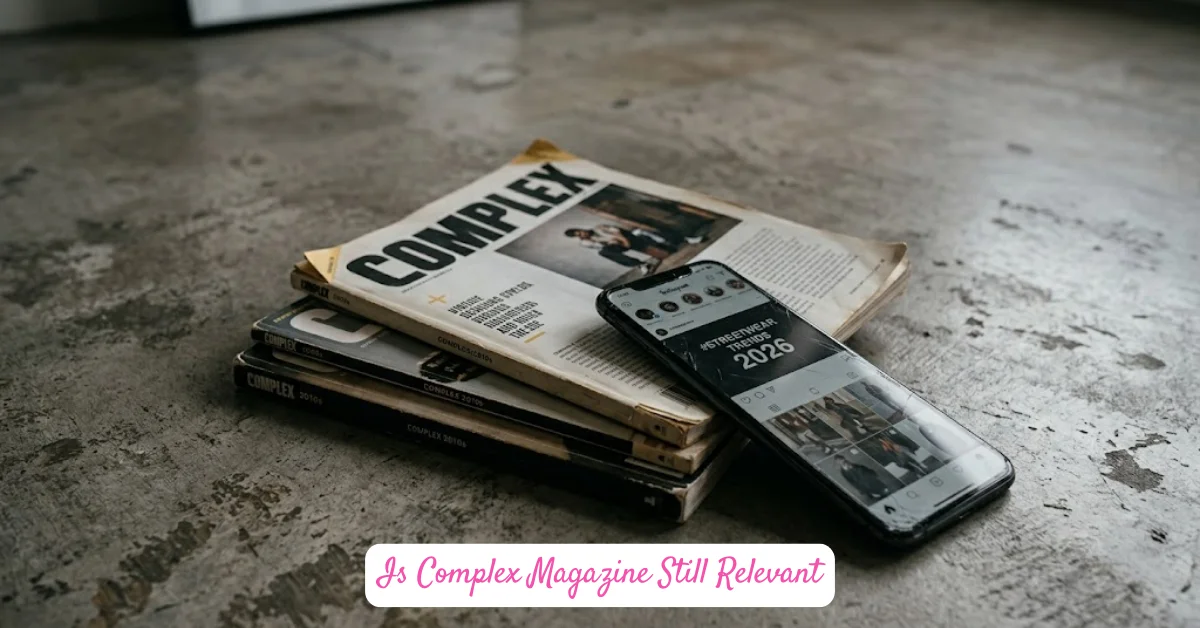
The time was once, and if you were born in the 2000’s or early 2010’s, you’ll know just how much.It was once when Complex was the bible of youth culture — and if you were born in the 2000’s or early 2010’s, you’ll remember just how much. Either you had a copy under your bed or you were frantically refreshing Complex.com in order to see which rapper just got “spotted” in which sneakers. This was actually that serious. Complex was not only hip hop and street wear, it was basically hip hop and street wear when it came to the media world. But now in 2026, the genuine inquiry that a lot of people are posing is, is Complex Magazine still relevant or is it one of these brands that runs on its momentum and the culture moves on without it. No beating around the bush here, Mandy’s here to get to the true answer so you can have the real answer.
A Quick History Lesson on How Complex Got Here
From Marc Ecko’s Brain to Your Bookshelf
Complex is the brainchild of Marc Ecko, the founder of Ecko Unltd, so the magazine originated before even the term “streetwear” had been coined by the people who were not in the habit of speaking French. Founded by Rich Antoniello and Marc Ecko in 2002 as a media brand, Complex has grown into a content powerhouse, covering digital, video, audio media and live events. Its DNA was always sneakers, hip hop, basketball and that kind of cool you couldn’t teach in a classroom. It was the magazine for the kid who could tell you the difference between a pair of Air Max 95s just by the silhouette, and who would get into a fight about rap beef at lunchtime.
The print edition was half editorial and half a legit buyers guide for the coolest sneakers and streetwear that you could get your hands on, with major celebrities doing the former. It was not an attempt at being GQ. It wanted to be the one that GQ wanted to know. And it was for a long time.
Going Digital, Then Going Everywhere
In a slow and painful march, print printed faded away, and Complex did what many magazines couldn’t: it did not choke. It was when YouTube was still a bit of a wild west frontier that it leaned into video marketing there, and it developed actual franchises that exploded. Joe La Puma’s take on sneaker shopping turned out to be one of the most-viewed interview formats on the platform: The idea of sneaker shopping with a celebrity is so basic, it’s almost embarrassing — but it worked! You saw what in real life, Drake buys with his own money. That’s content.
It was a real streetwear moment, the kind where the brands are dropping one-off collaborations and the line is completely out of hand, and made this a very real event, ComplexCon, where all the streetwear brands, artists and sneakerheads converge in one large space. Complex was no longer a media company, it was an experience.
The BuzzFeed Chapter: When Things Got Messy
The Acquisition That Nobody Was Excited About
Well, that’s where it gets a little complicated, because the ownership of Complex over the last several years can be chalked up to a TV show script. In 2021, Complex was sold to BuzzFeed for $300 million in cash and stock from Hearst and Verizon. The concept was to create a kind of large-scale digital media empire, stitching together these various brands. In practice? It was a mess.
In a revealing interview with BuzzFeed CEO Jonah Peretti, he revealed that his strategy to do a “merger of the super giants” hasn’t been successful as anticipated. To paraphrase, that’s an understatement. BuzzFeed was trading low enough to be in danger of being delisted from the Nasdaq and had experienced a series of bad quarterly reports. While all of this corporate chaos was going on, Complex was just sort of sitting there under BuzzFeed’s roof, probably wondering how it ended up in this situation.
The swoony period of the BuzzFeed News was actually terrible for the Complex name. Being owned by a shaky public company with declining shares is the opposite of coolness when you’re a cool brand. It was the culture savvy independence that gave Complex a sense of the streets that began to feel a little more like the quarterly earnings call.
The NTWRK Rescue Mission
Raised by Goldman Sachs and Main Street Advisors, online live-stream shopping platform NTWRK will acquire BuzzFeed’s Complex for $108 million, an admission for BuzzFeed that it did not win despite having paid close to three times as much three years ago.
So, the new CEO, Aaron Levant, who was one of the original founders of NTWRK, and in that day and age, one of the original ComplexCon founders, wanted to bring back the energy of the original print buyers guide, adding commerce and premium content. It was intended to “return that buyer’s guide ethos” and create more high quality content featuring celebrities, Levant said. Well, it really is a good idea to read what Complex was about in the first place. Whether they have lived up to it is another story.
Where Does Complex Actually Stand in 2026
The Content Is Still There, But Is It First?
Here’s the real deal. Complex 2026 continues to create content. It continues to be all about sneakers, music, streetwear, and pop culture. The website is live, the YouTube channel is still up and running, and Sneaker Shopping is still taking place. From Air Jordan release guides to NBA championship merch roundups, it’s clear there’s a team working hard to keep Complex’ homepage relevant and up to date in 2026.
However, in 2026, Complex Magazine is clearly still relevant upon entering TikTok. While Complex is writing a well-documented piece about the streetwear trends, some 23 year old camera wielding genius with a true passion for a vintage Nike has already posted three videos on the same topic, racked up 2 million views and kicked off a real conversation in the comments section. It’s the competition now and not a fair one, in the old media sense.
Complex TV Is a Real Move Though
It’s a smart, legit move that Complex TV launched on April 1, 2026 on Amazon Prime, Plex, Roku, Samsung TV Plus, TCL TV+, TiVo, Vizio and Xumo. Original show premieres, network exclusives, documentaries and popular movies are all part of the lineup that is delivered in the FAST channel, including Sneaker Shopping, GOAT Talk, and On Display. The kind of distribution play that could actually bring Complex to an age that still remembers the print magazine and already is too old to be on TikTok exclusively: that’s what is needed to get on your TV screen without requiring a subscription.
It’s a good move. I’ll grant them that.”
The Real Competition: Independent Creators Are Eating Lunch
TikTok and YouTube Killed the Media Company Star
Let’s get real about Complex — and the vast majority of culture-beating legacy media outlets. The fans who were once dependent on Complex to inform them of what was cool in sneakers and streetwear now have about 800 creators to follow who do the same but in a more timely and personal way, with much more energetic community involvement.
The low-tech “Sneakers With A Guy” YouTube channel, which a man has been creating from his Atlanta apartment since he was 11, differs from a well-curated editorial video from a media company. Not because the video is produced with less quality, but because the passion seems unfiltered. I wouldn’t be surprised if your sneaker content got even stronger if you quit trying to cover the NBA playoffs and pop music and internet drama, too.
Legacy culture media have been ruthlessly attacked by TikTok, which prioritizes speed, personality and community. When Complex writes its (considered) review on a new drop, the TikTok community has already unboxed, reviewed, had discussions about whether its too expensive to resell, and even had the questions of “is this worth it. Late to its own subject matter, Complex – no wonder it’s such a painful sentence to write about a brand that used to set the pace.
Niche Platforms Are Winning the Audience
The other issue that is killing the big-tent culture media model is the audience has become hyper-niche. The whole corner of the internet is dedicated to vintage sportswear. There is another streetwear option for luxury wear. Then there’s the one that’s for the girls of the sneaker world — and let’s be honest, Complex didn’t do a huge number of favors for them there, either. If you’re looking to cover everything, you will end up with no one’s real interest.
What Complex Still Does Well
The Legacy Franchises Are Still Genuinely Good
Sneaker Shopping is still a format that works. It’s comfortable, it’s familiar, it gets celebrities talking in a natural way and it brings out interesting moments. If you’re not a serious Complex fan, you’ll recognize the show by now and click on it if your favourite artist is mentioned in the thumbnail. It’s a difficult brand to create and difficult to destroy.
But ComplexCon as a real-life event is also important. Whereas everything is now online, the event is happening in a physical environment, and it’s connecting people, brands and exclusives. It’s something that a TikTok creator can’t do that Complex does in the live event space.
Complex also debuted Complex Shop, an curated shopping platform that is part of its editorial content, saying it wants to create “a Spotify-inspired commerce experience within editorial. That content-to-commerce pipeline is an interesting one, and it’s really pretty progressive. If they can make it feel native and not corporate, there’s something real there.
Sneaker Culture and Streetwear in 2026: Who’s Actually Setting the Trends
The Tastemakers Have Moved
The truth about sneaker culture in 2026? The tastemakers aren’t in an editorial office. They’re creators that have their own channels, they’re collectors that have their own Instagram archives, they’re community Discord servers where the most obsessive fans are discussing a colorway long before it’s getting some major media coverage.
The trend cycle is so rapid as of now that a new “core” or micro-trend is emerging on social media feeds almost every week. While their streetwear is pretty good, Complex does cover these trends — sometimes they’re reporting what the culture has decided rather than leading it. That’s a pretty big distinction between a “tastemaker” and a “reporter,” but Complex has moved toward the reporter side of the equation, maybe more of an extreme towards reporter than they would care to acknowledge.
The brands have also become more savvy in their approach to directly reaching consumers and creators instead of going through the conventional media channels. Sneaker creators with 500k+ subscribers on YouTube are being seeded with pairs for Nike’s upcoming drop, instead of waiting for a Complex piece. The power of print culture magazines has effectively broken down as a gatekeeping function no longer exists.
The itismandystyle Verdict
But does Complex Magazine still exist in 2026? The truth is: yes, but in specific ways that you should be interested in.
It’s not “no big deal” that it’s complex. It’s still one of the most recognizable names in youth culture media, it’s still creating content that a huge audience is eating, and the steps they are taking with NTWRK, Complex Shop and Complex TV indicate what they are doing is at least an attempt at evolution, and not just sitting on their well-known name and hoping for the best. The NTWRK time period was genuinely more intentional than the BuzzFeed period, where Complex was merely an item on a floundering public company’s revenues and expenditures list.
But, is Complex Magazine still relevant like it was in its golden glory days? Does it hold the final word on streetwear and hip hop culture that the young believe in? No. That power has been decentralized into hundreds of independent creators, smaller platforms and community spaces that operate quicker and can deliver more impact than any single media brand.
What Complex is in 2026 is a badge of the past that has genuine equity, and a fair amount of street presence as its defining quality — it’s not a culture-definer, but not a dinosaur either. It’s like a sneaker that was all the rage in 2012 and has been doing a good job of being a good retro for a few years now. You still rock it. You still respect it. You’re wearing stuff too that was not around back in the day of Complex.
It’s now a culture and Complex is a voice in the culture, not the voice. That’s the true testament to where the brand is in 2026.