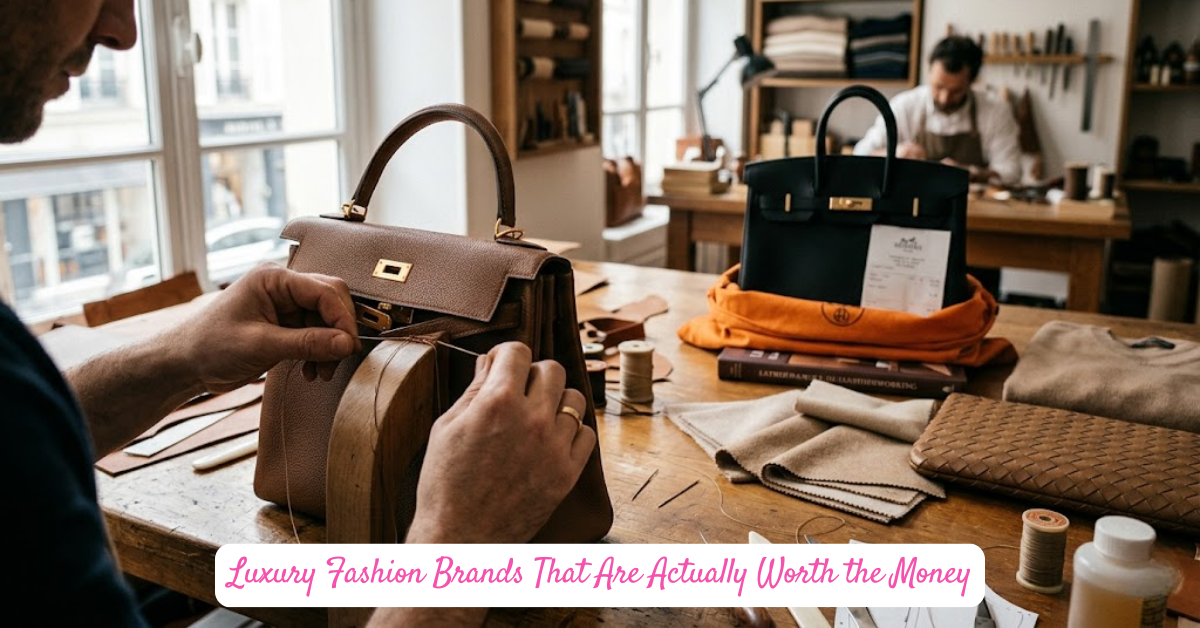
Alright, let’s have a little honesty. The majority of ‘luxury’ fashion is a very pretty scam. Four-figures for a logo, a vibe, and the right to be able to walk out of the store with something that will lose half its value as soon as you pick it up. Much of it is just over-priced fashion and a more uptight sales person. But — and this is a big but — there are real luxury fashion brands out there that you do not have to waste money on. Real craftsmanship, real materials and pieces that either gain value with time or hold their own value in your closet. Before you spend all of your savings on something that’s going to be in the sale bin by spring, let me show you the difference between who’s legit and who’s just hyping things up.
First, A Quick Reality Check On What “Worth It” Even Means
It is not a cheap option that is worth it. That’s the real cost of wear, that’s the durability of the thing to last longer than your last three situationships put together, and if you must ever sell it, you’re not standing in the resale checkout line crying.
The only thing that makes a luxury piece truly luxurious is craftsmanship (is it handmade and has years of training, or is it sewn by a machine in 12 minutes?), material (are they using real leather, vicuña, proper cashmere — not the “we sprayed plastic and called it heritage” stuff), and durability (will it look good in 10 years, or will it not be able to stop yelling “2026”?). Let’s explore the brands with that lens on.
Hermès — The Undisputed Final Boss
If luxury was a videogame, then Hermès would be the level you’d need to be on a waitlist and purchase history, and maybe a blood sample, to ever reach.
It deserves the throne for this reason: One Birkin is hand stitched by one artisan, which is using a centuries-old saddle stitching technique, and those artisans spend years preparing before they are even permitted to approach one of the Birkins. The bag is made to last a lifetime. The same kind of obsessive craftsmanship is what makes Hermès masters of the resale game: A bag can hold around 90% of its retail value, and some Birkins have even more than doubled the retail price, particularly limited editions or discontinued colors.
The figures are indeed crazy. In 2025, Jane Birkin’s original Birkin was auctioned for $10.1 million. Resale experts have pointed out that the Birkin and Kelly have outpaced gold as an investment over the past decade. Right now, the Birkin 25 and 30 are most sought after sizes. No, not crazy, a Birkin is closer to a Picasso than a purse.
The downside is that you’re not just going to wander in to buy one, and it costs a fortune to enter. But should we ever find ourselves in such a situation? It is one of the few luxury fashion houses that are truly worth it in a literal sense, money.
Chanel — Expensive On Purpose, And It Works
For Chanel, it was basically setting up the model of “increase the price yearly but make the previous ones seem like a steal.” Annoying? Yes. Effective? Also yes.
The Classic Flap is one of the symbols. The medium size, meanwhile, has risen from about $5,850 to more than $11,300 over the past few years, making any early buyers a pretty comfortable appreciator. One of the most popular pre-owned Chanel leather styles are the caviar leathers and neutral colours. The Boy bag and the 19 are also very strong.
As indestructible as Hermès? Nope — Chanel is a little more on trendy. A black caviar Classic Flap with gold hardware is close to a forever bag, though, without the waitlist cult.
The Row — The “New Birkin” Of Quiet Luxury
The Row was founded by the two Mary-Kates and Ashley Olsen, and it is the brand that everyone in the fashion world is talking about. No logos, no flash and just perfectly cut, dreamy materials and prices that make luxury lovers grimace in pain.
The quiet luxury wave has propelled The Row’s resale value, while the Margaux bag has been dubbed the next Birkin. The Row is not a monogram – you are purchasing a cut and cashmere. This is like being hot at the job without the stress of paying attention to your attire.
Loro Piana — Cashmere So Good It’s Basically Therapy
The brand that the real rich people wear when they don’t want you to know they’re rich is called Loro Piana. For a reason, it’s all about billionaires and Succession characters in Silicon Valley.
This 99-year-old Italian house obtains rare fibres, such as cashmere and the famous vicuña, which is finer than silk and more expensive than anything you’ll find in your closet. They avoid the currents of trends and capture about 70–85% value for their pieces. A Loro Piana sweater is not a shout. It says, “I’m more expensive than your rent and I’m here for a longer duration than your lease.
Bottega Veneta — The Logo-Free Flex
The intrecciato weave is Bottega’s signature, the woven leather that you can see from a room away! It’s anti-branding branding and it’s chef’s kiss.
The craftsmanship, or not so much, is indeed really labor intensive, which is exactly why quality beats a lot of similarly priced competitors. The Andiamo and classic pouches are both worthy of value and Bottega has captured the quiet luxury trend so well. This is your brand if you wish for people who know to know.
Brunello Cucinelli — The Stealth-Wealth Cashmere King
Brunello Cucinelli is the tech billionaires’ obsession with cashmere. Simple, decently produced in an Italian village which the founder restored, and too soft. You’re investing in a quiet “I have nothing to prove” attitude and craftsmanship. Not a showy purchase, but rather a very rewarding purchase.
Now The Spicy Part — Who’s Overhyped?
Let’s get to the point of the day when it comes to spending your money—not everything that is expensive is worth it.
Gucci
It’s been a big emphasis on logo-mania for Gucci, and the critics have been unflattering — lately it’s not about the timeless design, but about the price of the logo. Around 55 – 70% is a solid middle tier resale value, not investment level territory. The best is the Marmont. Cute, fun, trendy — but don’t pretend that it’s an heirloom!
Balenciaga
Balenciaga loves shock value (when did celebrities ever wear a literal trash bag as a purse?). The problem is the fabrics and tailoring don’t always match the price tag. Good for a one-hit “wow” goodbite, and not so good as a value play.
Louis Vuitton (It’s Complicated)
Around 60-75% they’re worth the money, though, as LV classics such as the Neverfull and Speedy are relatively old and have a nice canvas. However, many have seen an LV drop anywhere between 30-45% as soon as they walked out the door, and sales of the brand have been on a downward trend. Purchase the classic canvas items rather than the trendy “drop” items.
How To Actually Buy Luxury Smartly (Without Going Broke)
The secret rich-girl trick: You don’t need to purchase at retail. There is an active resale market, and you can get icons for much less than retail.
Avoid unsafe websites – these are web-based companies that deal with pre-owned luxury items with the stamp of approval, such as The RealReal, Vestiaire Collective and Vestiaire Collective. Authentication is non-negotiable. If you’re buying anything by Hermès, Chanel, or LV, no matter how small the inconsistencies, it could be fake; if you’re not sure, go to a professional authentication service before you spend a cent.
Some rules of the game: The condition is all important, and originality of package and dust bags, and receipts can mean real value (just receipts can increase value by 10–15%). Neutral colors and black colors are more valuable than seasonal ones – which means that the dull black bag is the one that’s more clever. It’s not just about secondhand, sometimes rare Hermès pieces resell new.
The Gen-Z Take: Buy Less, But Better
That’s where I believe our generation is doing well. Old money / quiet luxury is not about money, it’s about purpose. Fast fashion, that tears apart after the first wash, and fast trends, that speed through the year at the speed of light are no longer an option.
The smart move is not to spend $10,000 that you don’t have! It’s all about recreating the vibe, with custom neutrals, true leather add-ons, vintage Ralph Lauren from the thrift shop, and then, when you can, investing in one true article that will last for a long time. One actual Bottega pouch is better than 10 Shein bags. One properly authenticated pre-owned Chanel beats a closet of things that will be donated in a year.
It’s that whole luxury fashion-thing-from-the-buyers-are-actual-who-they-say-they-are-crap thing.
Therefore, save money, shop wisely, look for used items, verify anything, and don’t forget: The flex was never the logo. The flex is about the end of the day, knowing what is worth it. There will still be luxury fashion brands that are actually worth the money that are still slaying long after the trite fashion trends have been forgotten — and so will you be.