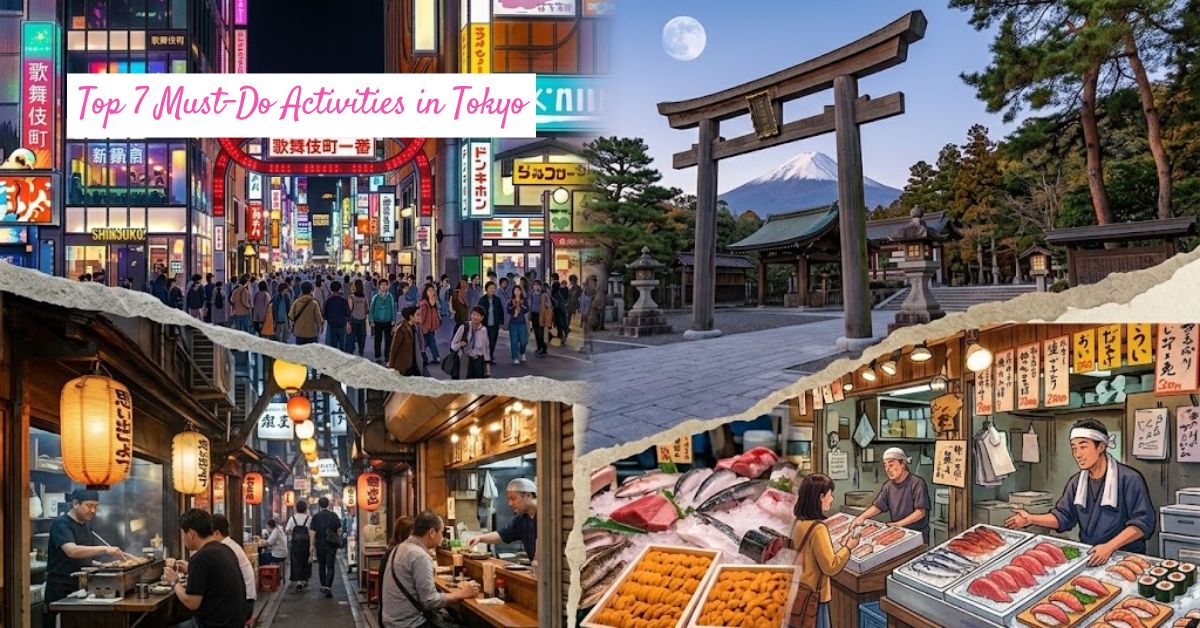
Tokyo packs more sensory range into a single subway line than most cities manage in their entirety. One stop delivers centuries-old shrine gates, the next drops you into a basement arcade blasting synth pop, and the one after that smells like grilling eel. Knowing which experiences actually earn a spot on a short itinerary — versus which ones are just crowded photo ops — makes the difference between a trip that feels rushed and one that clicks into place. Here are seven activities worth building a Tokyo visit around.
Wander the Backstreets of Yanaka
Skip the well-worn Asakusa route for a morning and head to Yanaka instead. This is one of the few Tokyo neighborhoods that survived both the 1923 earthquake and World War II bombing raids, so the wooden houses, narrow lanes, and small temples are original, not reconstructions. Yanaka Ginza, the main shopping street, is lined with senbei shops, a tofu shop that’s operated since the 1970s, and a startling number of cats that locals feed and photograph. Come in the late afternoon when the light hits the rooftops and the smell of grilled skewers drifts down the alley.
Watch (or Join) the Sunday Cosplay Scene at Harajuku
Takeshita Street gets the tourist traffic, but the real spectacle happens a few blocks over at Jingu Bridge, near the entrance to Meiji Shrine, especially on Sundays. Teenagers and young adults show up in elaborate costumes — Lolita fashion, anime characters, decora style layered with plastic charms — not as a performance for visitors but as a genuine subculture ritual. Bring a camera and ask before photographing anyone directly; most are happy to pose if approached politely. Afterward, walk into Meiji Shrine itself, where the towering torii gate and gravel paths through a forested 170-acre park feel like a different city entirely.
Eat Your Way Through Tsukiji Outer Market
The famous fish auctions moved to Toyosu in 2018, but the outer market at Tsukiji kept its stalls, and it’s still the best place in Tokyo for a standing breakfast of grilled scallops, tamagoyaki on a stick, and uni straight from the shell. Arrive before 9 a.m. to beat the lines at the popular tuna and unagi stalls. Vendors here are used to visitors and often speak enough English to explain what’s on the grill. Pair the market with a short trip to Toyosu itself if watching the actual tuna auction (starting around 5:30 a.m., with limited public viewing slots) sounds appealing.
Get Lost in Shinjuku After Dark
Shinjuku at night is Tokyo distilled into neon. Golden Gai, a cluster of roughly 200 tiny bars packed into six narrow alleys, holds maybe six to eight seats per bar, which forces a kind of forced intimacy with strangers and bartenders alike. A few blocks away, Omoide Yokocho (“Memory Lane”) serves yakitori and cheap beer under a canopy of paper lanterns, largely unchanged since the postwar black-market days when it got its start. For a wider view, the free observation deck at the Tokyo Metropolitan Government Building offers a skyline view that rivals paid options at a fraction of the cost — literally none.
Take a Structured Look at the City’s History and Architecture
Self-guided wandering covers a lot, but some of Tokyo’s most interesting stories — the layout of Edo-period neighborhoods, the reasoning behind certain temple designs, the way postwar reconstruction shaped entire districts — benefit from someone who can explain the context on the spot. Small-group, expert-led Tokyo tours run by specialists in art, architecture, and history fill that gap well, especially for visitors who want more depth than a guidebook provides without signing up for a 40-person bus group. It’s a good way to understand what you’re looking at rather than just photographing it.
Ride the Chuo Line to Kichijoji
Most visitors stick to the Yamanote loop, but a 20-minute ride west on the Chuo Line lands you in Kichijoji, a neighborhood residents consistently rank as Tokyo’s most livable. Inokashira Park has a pond you can paddle across in a swan boat, and the Ghibli Museum sits just south of the park (tickets sell out weeks ahead, so book early). The surrounding streets have some of the city’s best secondhand clothing shops and low-key jazz bars.
Try an Izakaya Crawl in Nakameguro
Nakameguro sits along the Meguro River, which turns into a tunnel of pink blossoms during cherry blossom season but is worth visiting any time of year for its concentration of small izakayas, natural wine bars, and design shops. Unlike Shibuya or Shinjuku, the pace here is unhurried, and reservations aren’t usually necessary for a table of two or three. Order a few small plates at each stop rather than a full meal at one, which is closer to how the neighborhood is meant to be eaten through.
None of these seven require a rigid schedule or advance planning beyond booking the Ghibli Museum tickets and knowing when the tuna auction slots open. What they have in common is proximity to daily life in the city rather than distance from it — markets people actually shop at, bars locals actually drink in, streets that existed before tourism reshaped them. Build a Tokyo trip around a few of these, leave room to wander between them, and the city does the rest.