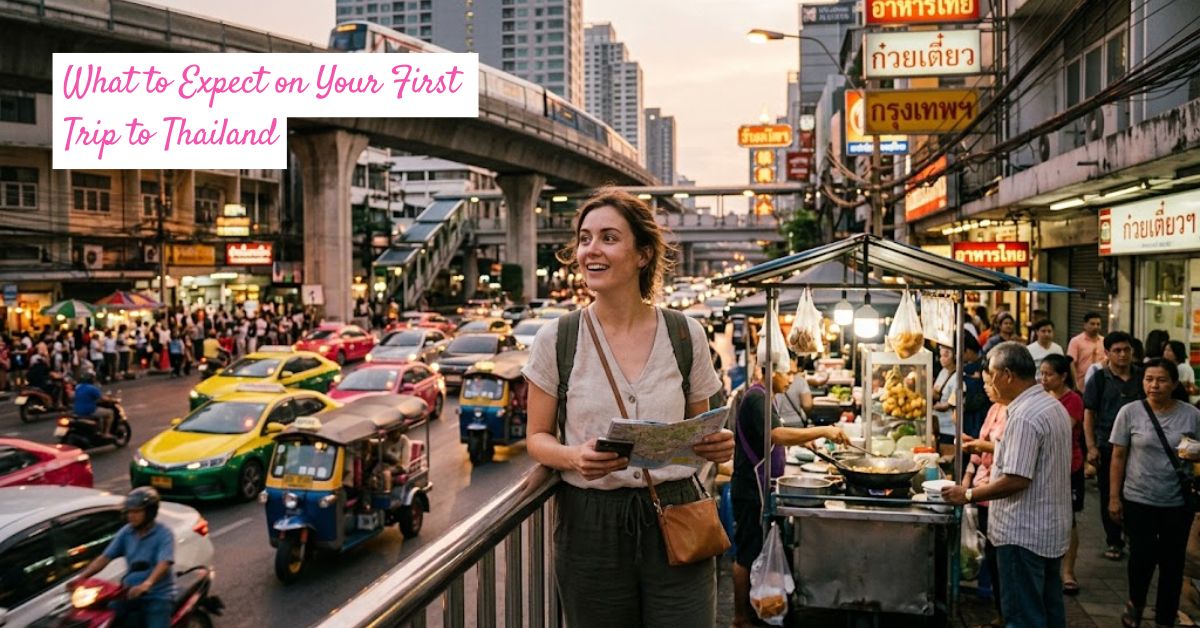
The moment you step off the plane in Bangkok, the humidity wraps around you like a wet towel, even at midnight. That single sensory jolt tells you a lot about what the rest of the trip will feel like: intense, unfamiliar, and full of small surprises that no amount of research fully prepares you for. Here’s what actually happens once you land, and how to handle it.
The Heat Will Hit You Before Anything Else
Thailand sits close to the equator, and most of the country stays warm and humid year-round, with average highs between 90 and 95 degrees Fahrenheit from March through May. Even the cooler season, roughly November through February, rarely dips below 75 degrees during the day. Pack lightweight, breathable clothing and expect to shower more than once a day. Air conditioning is common in malls, restaurants, and hotels, but stepping outside still feels like walking into a greenhouse.
Bangkok Is Louder and More Layered Than You Expect
Bangkok isn’t just one city experience, it’s several stacked on top of each other. The Chao Phraya River area feels historic and slower-paced, with temples and old wooden shophouses. A few miles away, Sukhumvit Road buzzes with rooftop bars, malls, and traffic that barely moves during rush hour. First-time visitors often underestimate how spread out the city is, so plan for 30 to 60 minute transit times between neighborhoods, even for destinations that look close on a map.
Temples Require More Planning Than You’d Think
Wat Phra Kaew, Wat Arun, and Wat Pho are must-sees, but they come with dress codes that catch people off guard. Shoulders and knees need to be covered for both men and women, and flip-flops, while comfortable, need to come off before entering most temple buildings. Bring a light scarf or sarong to cover up if you’re wearing shorts or a tank top, since many temples rent or sell cover-ups at inflated prices right at the entrance. Arriving before 9 a.m. also makes a real difference, both for the heat and for avoiding tour bus crowds.
Food Is Everywhere, and Street Stalls Often Beat Restaurants
Some of the best meals in Thailand cost less than $3 and come from a cart on the sidewalk. Pad kra pao, boat noodles, and grilled skewers are staples you’ll find in nearly every neighborhood, often cooked fresh in front of you. Street food safety generally comes down to volume and turnover: stalls with long lines and visible demand are safer bets than quiet ones with food sitting out. Bottled water is the standard for drinking, since tap water isn’t considered safe for visitors.
Getting Around Takes Some Adjustment
Traffic in Bangkok can be genuinely bad, and taxis sometimes refuse short or inconvenient rides despite it being illegal to do so. The BTS Skytrain and MRT subway are faster, cheaper, and more reliable for getting around the city center. In smaller towns and islands, tuk-tuks and songthaews, the shared pickup trucks with bench seating, fill the gap where public transit doesn’t exist. Grab, the regional ride-hailing app, works well in most tourist areas and removes the guesswork around fares.
Money and Bargaining Have Their Own Rules
Thailand runs on cash more than many visitors expect, especially at markets, small restaurants, and rural areas. ATMs are widely available but usually charge a foreign transaction fee of around 220 baht per withdrawal, so larger, less frequent withdrawals save money over time. Bargaining is expected at markets and with tuk-tuk drivers, but not at malls, convenience stores, or restaurants with posted prices. A polite smile and a counteroffer at roughly 50 to 60 percent of the initial price usually gets you to a fair number.
Higher-End Travel Opens Up a Different Side of the Country
Not every trip to Thailand needs to run on backpacker logistics. Private villas on Koh Samui, boutique hotels tucked into the hills above Chiang Mai, and personal drivers who handle the traffic for you all exist at a level that feels far removed from crowded temple courtyards. Travel agencies that focus on Thailand luxury trips can arrange private long-tail boat tours, skip-the-line temple access, and multi-day itineraries that balance culture with genuine downtime, which matters more than it sounds like it would after a few 95-degree afternoons of sightseeing.
The Islands Are Worth the Extra Travel Day
Getting to Phuket, Koh Samui, or Koh Phi Phi usually adds a flight or a long ferry ride on top of the Bangkok leg of the trip, and it’s worth every extra hour. The water around these islands runs a clear turquoise that photos rarely do justice to, and the pace slows down considerably compared to the capital. Many travelers regret only budgeting two or three days for the islands after spending the bulk of their trip in Bangkok.
The biggest adjustment on a first trip to Thailand isn’t the food, the heat, or the traffic individually, it’s the pace of switching between them within a single day. Building in slower mornings and fewer scheduled activities than feels necessary will make the trip feel less like a checklist and more like the place it actually is.