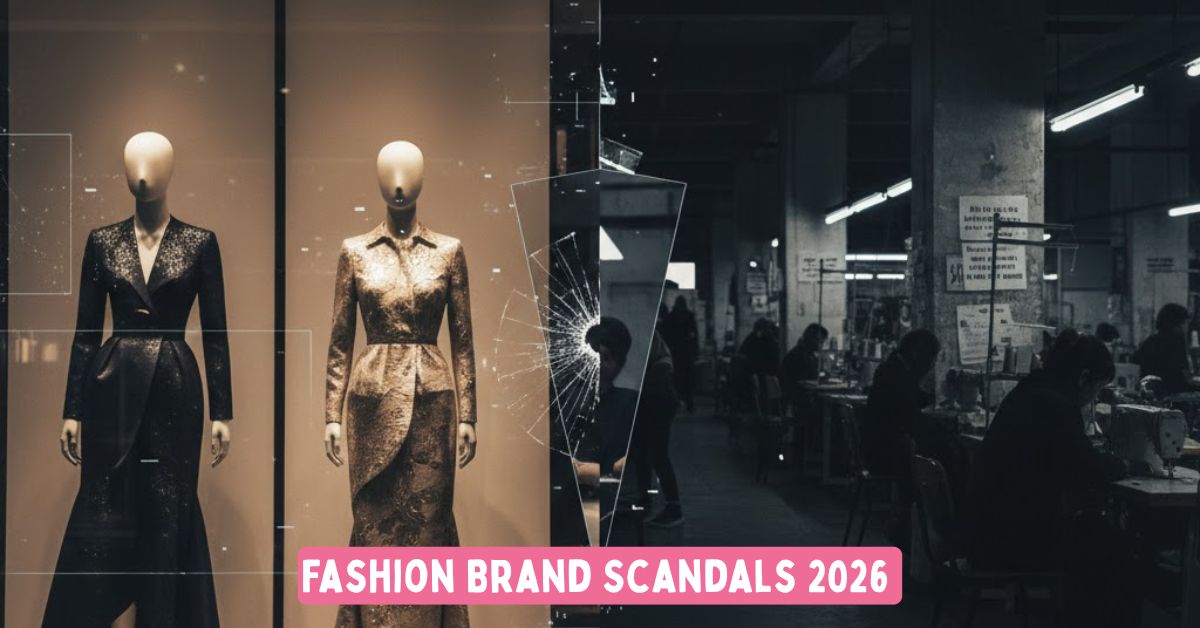
The fashion industry, however, has never had a clear-cut affair with controversy, yet, frankly speaking? The play we have just seen as we enter 2026 is in another dimension. At the same time all people are scrolling through their flawlessly edited Instagram accounts and jizzing over the new designer lines, there exists the dark underbelly of all that gloss and glamour. The fashion brand scandals 2026 is shaping up to be quite the year for industry wake-up calls, and I have come to leak all the information on what has been actually happening.
I am not here to cancel people and destroy your shopping sprees. However as long as we spend our hard-earned money on these brands, we would like to hear what really goes on behind those beautiful storefronts and smooth marketing efforts, right? Then pour yourself a cup of coffee, sit back and we are going to discuss the dirty business of fashion in 2026.
The Labor Crisis That Won’t Go Away
Do you remember when we believed that fast fashion could not be any more? Well, surprise! The start of 2025 has had some very disturbing revelations regarding child labor in cotton plantations. Pratibha Syntex is the biggest manufacturer of allegedly sustainable clothes that was associated with such big brands as Zara, H&M, Gap, and even Amazon.
This is what is especially outrageous: these were not mere empty accusations. According to investigators children as young as six years were engaging in cotton field work to pay the parents debts. A thirteen year old girl was admitted to the hospital due to exposure to artificial pesticides. One of the victims was eleven years old and was vomiting toxic fumes. This is the truth behind the so-called sustainable fashion that some of these businesses were advertising at high prices.
The worst part? These brands, when put to the question, were essentially shrugging and saying that they would look into it. Coming into the year 2026, this problem has not simply vanished just because we got off the news cycle. The fashion brand scandals 2026 conversation needs to keep this front and center because these are real kids suffering for our cute outfits.
SKIMS Gets Exposed
The shapewear empire by Kim Kardashian has been celebrity-fueled and marketing on body positivity but the 2024 Remake Fashion Accountability Report literally destroyed the image. SKIMS received an actual zero out of 150 points, which also matched the lowest possible score with SHEIN. Yes, you read that right. Zero.
The brand was accused of the total loss of transparency regarding the way of working with labor and the environmental impact. Bangladesh and Vietnam workers are said to be earning below living wage as Kardashian shares empowerment and inclusivity. The situation is so ironical that you can slice it with a knife.
People were more angry about the silence. As hashtags such as PayYourWorkers were trending on social media all of 2025, SKIMS was all but silent to the whole affair. The brand was accused by climate activists of highlighting the issue of climate change as it was making products based on fossil fuels. The nipple bra scandalous campaign did not assist in these cases either and most people termed it as tone-deaf and exploitative. As we navigate the fashion brand scandals 2026 landscape, SKIMS remains a perfect example of how not to handle accountability.
Victoria’s Secret Tries and Fails at Inclusivity
The much-hyped 2024 Victoria’s Secret Fashion Show was supposed to mark the brand’s redemption arc after years of controversy. Instead, it became another chapter in the fashion brand scandals 2026 saga. Even with the discussion of inclusiveness and body positivity, the runway featured thin, white, cisgender models, as usual.
Jameela Jamil, a body positivity activist, became involved in a Twitter fight with one of the Victoria Secret models, accusing the company of being transphobic and fatphobic. The brand did not conveniently address the association with Jeffrey Epstein via its former CEO Leslie Wexner either, which is a gigantic blight on their reputation.
This is what makes me exasperated: they could walk the walk and not just talk the talk. But no, it is the same playbook with a different marketing twist. True inclusivity is not simply the declaration that you include different bodies in the press releases.
When Cultural Appreciation Becomes Appropriation
One of the biggest controversies that Prada got involved in in 2025 that perfectly exemplifies the way in which luxury brands have not yet learned the distinction between inspiration and appropriation. The Spring-Summer 2026 collection of the brand consisted of sandals which were fundamentally the same product of the traditional Kolhapuri chappals produced in India except that they had forgotten about one minor fact that the design originated there.
Prada had to concede soon after the criticism that the sandals were a reference to traditional Indian footwear. The problem? These are handmade Indian sandals which are priced at as low as five dollars or at a price as high as a hundred dollars depending on quality and the Prada ones would probably make it to stores at a price of two thousand dollars or even higher. In the meantime, the real craftsmen in Kolhapur who have been practicing this trade over the ages, work under roots in poor conditions and with very low salaries.
It is the one thing that Indian fashion designer Shubhika Sharma has phrased it best when she said that it is all about respect. The luxury brands stealing designs and taking them without recognition or cooperation are not glorifying craftsmanship. They are taking advantage of it to gain profits.
Adidas were no exception to having their own cultural headache when they were openly criticized and condemned by the Mexican government concerning sandal-inspired shoes which were perceived to be a form of cultural appropriation. The executives even needed to go to Mexico to make an apology. These incidents highlight how the fashion brand scandals 2026 extend far beyond just labor issues into matters of respect and cultural sensitivity.
The Greenwashing Epidemic
I could use a dollar to every single brand that insists to be a so-called sustainable one without doing anything of significance, to support it. The greenwashing issue has become an epidemic and the consumers are beginning to notice.
Zara produces five hundred new models each week and 450 million clothes per year, but still somehow, they would have us think that they are eco-friendly. Their Join Life was being promoted as green but as research found out, it was generally ordinary products with green labels pasted on them.
Adidas was caught in France with their fake sustainability statements about Stan Smith sneakers. They were selling them as half-recycled and that is very nice until you understand that only small portions of the frame in the shoe were recycled. They also created trainers out of the “ocean plastic” which proved to be collected in the Maldives and exported as far as Taiwan to manufacture it. There is no word like environmental responsibility like having to travel the world unnecessarily, right?
H&M introduced their Conscious brand following several years of incineration of unwanted goods, yet critics claim that it is merely another advertising strategy to seem like a sustainable company, even though they continue to use the fast fashion business model. As fashion brand scandals 2026 continue to unfold, greenwashing remains one of the most frustrating issues because it actively misleads consumers who are genuinely trying to make better choices.
AI Takes Jobs and Raises Questions
This is a more recent controversy that has been escalating: AI-made models and imagery. In August 2025, Vogue US released a Guess advertisement, with all-AI-generated models called Vivienne and Anastasia. The response was fast and forceful.
The audience of Tik Tok demanded the cancellation of magazines subscription and boycotts of brands. It is best put in one line by one creator: The fact that they are using fake women in their magazines, speechless. Another has mentioned that Guess used to have iconic campaigns with Eva Mendes and Drew Barrymore and they have replaced real people with computer generated images.
Levi collaborated with an AI firm to feature different body types online, but received allegations of the so-called fake diversity as they could have simply employed actual diverse models instead. The digital replicas of real models employed by H&M also brought up the issue of consent and displacement of jobs. Millions of real people, models, photographers, stylists and make up artists work in the fashion industry. It is quite dystopian to replace them with AI in order to reduce costs and say that it is an innovation.
This is becoming a significant part of the fashion brand scandals 2026 conversation because it touches on ethics, the labour rights and the future of creative work. Do we truly feel good about an industry that is humanizing algorithms?
Data Breaches and Cybersecurity Nightmares
Replying to the current issues, Kering Group (the mother brand of Gucci, Balenciaga, Saint Laurent, etc.) faced a colossal cybersecurity attack in summer 2025. Hackers were able to gain access to personal information about millions of customers such as names, address, email, telephone numbers and shopping records.
The team who did it was known as Shiny Hunters and they said they stole data associated with 7.4 million unique email addresses. Although Kering ensured that no financial data was stolen in the banking sector, the magnitude of the leak remains frightening. Their wrong hands with your shopping preference and identification? Not ideal.
As IBM study has revealed, the median cost of retail data breach was 4.88 million dollars in 2024 and the figure is increasing. With fashion companies intensifying their effort on e-commerce and other digital sites, cybersecurity risks are becoming more threatening. This technological angle to fashion brand scandals 2026 shows how the industry’s problems evolve with the times.
What’s Actually Changing for 2026?
The million-dollar question here is, are things really getting better or are the brands simply getting a better PR? Within the next ten years, 2026 to be more precise, there are certain signs that we are moving in the right direction, albeit at a glacial rate.
Others like luxury houses were hiring new creative directors all over 2025, hoping that a new outlook would add excitement and responsibility to their brands. Hermes has a new menswear creative director, Grace Wales Bonner, as well as significant leadership changes in a number of other houses. Whether such changes are reflected together in the real ethical improvements or in the improved marketing is yet to be realized.
International legislation is being suggested that will reduce greenwashing and require transparency. The problem is enforcement. It is of no use having laws that are not enforced by anyone on the brands that violate them. The Advertising Ethics Jury in France has begun to make the misleading claims of sustainability, a move in the right direction.
According to McKinsey State of Fashion 2026 report, the industry is eventually realizing that business as usual is not sustainable. Sustainability and ethical practices are the buzz words being mentioned by the executives as concern, but this time around, the executives have been talking about it years ago as they perpetuate undesirable practices.
The Real Talk Section
Look, I love fashion. I really do. It is like magic when a jacket is just cut to make a perfect fit or when one gets a pair of jeans that fit. However, we cannot continue to play the game of pretending that our shopping ways exist in a vacuum that is independent of the impacts they have in the real world.
The fashion brand scandals 2026 aren’t just isolated incidents or PR mishaps. They are the symptoms of a fundamentally flawed system, in which the primacy of profit is placed above that of people and planet. It is not good when the large brands are rated zero out of 150 on accountability reports, when children are working in hazardous industries, when entire civilizations are used without recognition, when something is seriously wrong.
The good news? There is more power within us than we believe. Whenever a scandal goes viral and brands are subjected to actual backlash, they have to act like they care at least. They can no longer get away with hiding problems under the carpet as was the case in the past due to the social media. Brands eventually need to listen when consumers insist on transparency and vote with their wallets or they may become irrelevant.
Moving Forward Without Losing Our Minds
What then do we actually do with all this information? Is it high time we simply do not purchase clothes anymore and become minimalist monks? And certainly not realistic to most of us, myself included.
The trick is to be educated and make a better decision where possible. Brands that are actually committed to disclosing their supply chains. Find certifications that are independent and have actual meaning and not marketing buzzwords. Shop less and shop high quality that is very lasting. Shop secondhand when you can. Advocacy on the move toward the enactment of laws that make corporations responsible.
The best thing is to continue discussing these problems. The fashion brand scandals 2026 and only matter to continue to pay attention and demand change. Our limited attention spans and our fascination with the latest trendy thing detracting our focus on the scandal in July, last month, provides the brands with a certain level of confidence. Don’t let them off that easy.
The Bottom Line
The fashion industry is at a cross-road as we progress into 2026. Do brands really take their change seriously, or do they keep repeating the pattern of scandals, followed by false and weak apologies and token reforms? In part, that is contingent on the fact that we consumers remain active and continue to insist on improvement.
The unpleasant reality is that affordable, fast fashion is virtually always constructed at the cost of somebody somewhere in the supply chain. The luxurious beautiful items are usually related to cultural orientation or environmental disaster. The added benefit of the easy online shopping may be a breach of data and cybersecurity threats. This is not to hold you responsible in any way of enjoying fashion but to make a wise decision in what exactly it is you are supporting.
The conversation around fashion brand scandals 2026 isn’t about perfection. It is concerning development and responsibility. It is also about realizing that there is a tangled network of human labor, environmental effects and ethical implications behind every piece of clothing. And, perhaps, just perhaps, given how many of us are concerned about that, the industry will simply be left with no option but to change really.
Be informed, be discerning, and in the name of everything that is in vogue, continue to demand of these brands. Such is the actual tendency that should take off in 2026.