Kyoto packs over 1,600 Buddhist temples, 400 Shinto shrines, and a handful of distinct historic districts into a city that’s walkable in sections but sprawling as a whole. Travelers routinely underestimate how much time it takes to see even the highlights properly, then end up rushing through Fushimi Inari in the rain or skipping Arashiyama entirely. The right length of stay depends on your pace and priorities, but there are clear benchmarks that work for most trips.
The Short Answer
Three full days is the minimum for a first visit that covers the major sites without feeling like a sprint. Four to five days lets you slow down, add a day trip to Nara or Uji, and actually sit in a garden instead of just photographing it. Anything beyond six days starts to reward travelers with a specific interest, like temple architecture, kaiseki dining, or textile history, rather than general sightseeing.
Kyoto isn’t a city you conquer in a single afternoon between other stops. It rewards a slower rhythm, partly because many of its best experiences, a quiet moss garden, an early-morning shrine visit, a machiya-lined street with no crowds, only reveal themselves when you’re not racing to the next checkpoint.
What Three Days Actually Covers
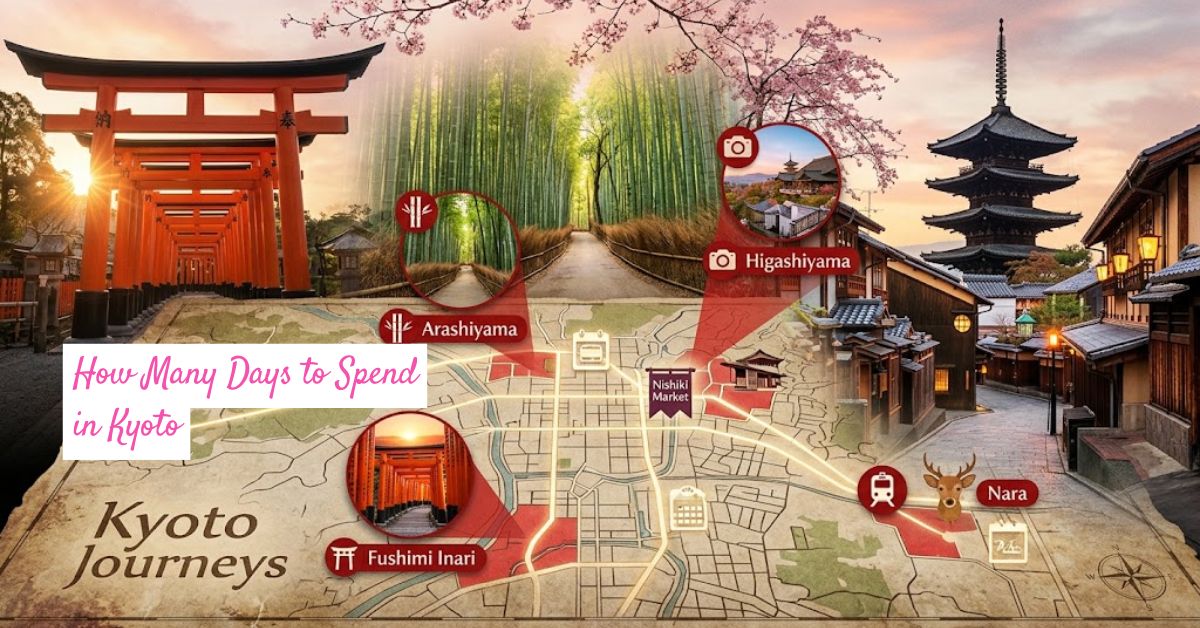
A three-day itinerary works if you split the city geographically instead of jumping across town repeatedly. Day one can handle Higashiyama: Kiyomizu-dera, Sannenzaka and Ninenzaka’s preserved streets, and Gion in the early evening when lanterns start to light up the tea houses. Day two suits Arashiyama and the northwest, including the bamboo grove, Tenryu-ji, and Kinkaku-ji if you start early enough to beat tour buses. Day three leaves room for Fushimi Inari at sunrise, followed by Nijo Castle or the Nishiki Market for lunch.
This pace is tight. You’ll see the postcard sites, but you won’t have slack for weather delays, long lunches, or the temple that turns out to be more interesting than expected. Three days works best for travelers combining Kyoto with a broader Japan itinerary that includes Tokyo and Osaka.
Why Four to Five Days Changes the Experience
Adding a fourth and fifth day opens up neighborhoods that most rushed itineraries skip. Philosopher’s Path, connecting Ginkaku-ji to Nanzen-ji, is a two-hour walk past canals and small cafes that rarely makes a three-day list. The Fushimi Sake District, southeast of the city center, offers tastings and a quieter, more residential feel than the tourist-heavy areas.
Five days also makes a day trip realistic. Nara, home to Todai-ji’s giant bronze Buddha and the deer park, is about 45 minutes away by train. Uji, known for matcha and the Byodo-in temple depicted on the 10-yen coin, is even closer. Both destinations deserve a half-day at minimum, and trying to squeeze one into a three-day Kyoto stay usually means cutting something else.
This length also gives you room to choose accommodations strategically rather than just booking whatever’s available near the station. Staying a few nights near Gion and a few near the Arashiyama side, for instance, can cut down on commute time across the city. Comparing options through a site that lists Kyoto Hotels by neighborhood makes it easier to match your stay to whichever district you’re prioritizing that week.
When a Week or More Makes Sense
A full week suits travelers who want to go beyond the standard circuit. That might mean visiting Kyoto during a specific season, like the roughly two-week cherry blossom window in early April or the more predictable but equally striking maple foliage in November, when timing matters more than checklist coverage. It also suits people interested in specific crafts, such as Kiyomizu pottery workshops, kimono rental and photography sessions in Gion, or multi-course kaiseki dinners that require reservations weeks in advance.
A longer stay also accommodates rainy days without derailing the whole trip. Kyoto gets a fair amount of rain, particularly in June, and having a buffer day means a downpour doesn’t cost you Fushimi Inari or the bamboo grove entirely.
Matching Days to Season
Time of year affects how many days you’ll want, not just when to go. Cherry blossom season and autumn foliage bring crowds that slow everything down, so the same itinerary that takes three days in February might realistically need four in early April. Summer’s heat and humidity can also shorten how much walking you’ll want to do per day, which stretches a compact itinerary into a longer one.
The Practical Takeaway
If time is limited, three days covers the essentials without feeling like a checklist exercise, provided you group sites by neighborhood rather than crisscrossing the city. If you have flexibility, five days is the point where Kyoto stops feeling like a series of famous stops and starts feeling like a place with its own rhythm. Decide which experience you want first, then let that number of days drive the rest of the planning.