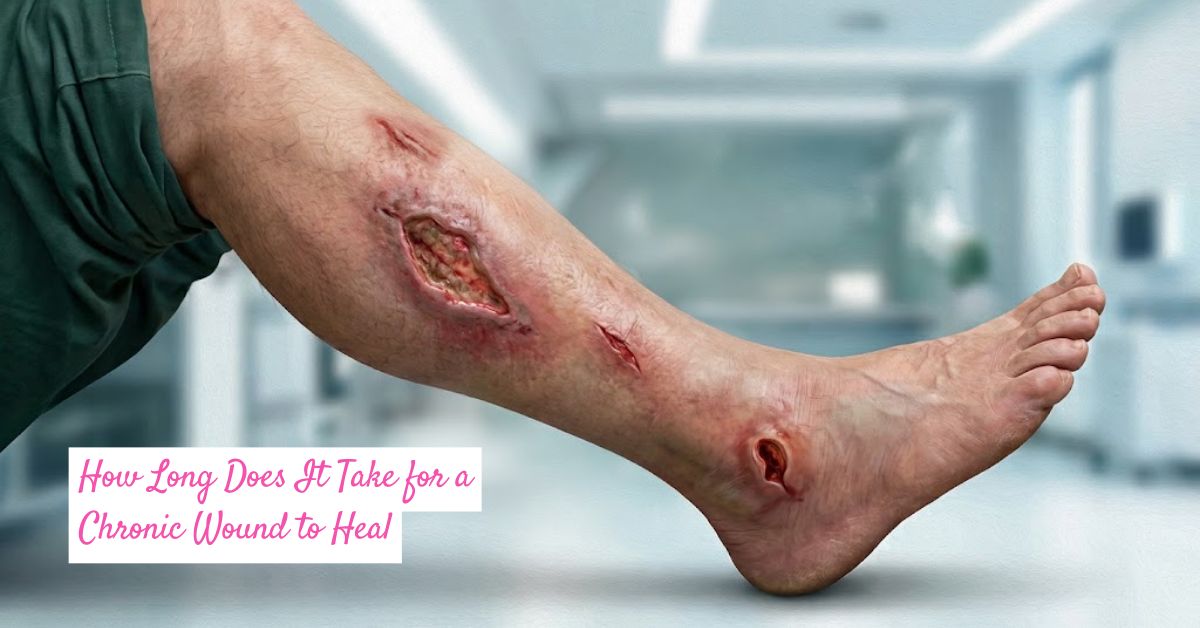
A wound that hasn’t closed within four to six weeks has crossed a line doctors take seriously. At that point, it’s no longer just a slow-healing cut — it’s classified as chronic, and the clock for recovery starts looking very different than it would for a scraped knee or a surgical incision. Understanding what “chronic” actually means, and what realistic timelines look like, helps set expectations and catch problems before they get worse.
What Counts as a Chronic Wound
Most acute wounds move through the healing stages — inflammation, tissue formation, and remodeling — within two to four weeks. A wound is considered chronic when it stalls in one of these phases, usually the inflammatory stage, and shows little to no improvement after a month of standard care.
Common examples include diabetic foot ulcers, venous leg ulcers, arterial ulcers, and pressure injuries (also called bedsores). These wounds tend to develop where blood flow is poor, nerve sensation is reduced, or constant pressure prevents tissue from repairing itself.
Typical Healing Timelines by Wound Type
Timelines vary widely depending on the underlying cause. Diabetic foot ulcers, for instance, take an average of 12 weeks to heal with consistent treatment, though studies show only about 30% heal within that window on the first attempt. Many take considerably longer, especially if blood sugar control is inconsistent.
Venous leg ulcers, caused by poor circulation returning blood to the heart, often require 24 weeks or more of compression therapy and wound care before full closure. Some persist for a year or longer without proper intervention.
Pressure ulcers depend heavily on stage. A Stage 1 pressure injury might resolve in a few days once pressure is relieved, while a Stage 3 or 4 wound involving deeper tissue damage can take several months, sometimes requiring surgical repair.
Arterial ulcers, tied to reduced blood supply from narrowed arteries, are notoriously slow and frequently need vascular intervention before healing can even begin.
Factors That Slow Healing Down
Several conditions interfere with the body’s natural repair process. Diabetes is one of the biggest culprits — high blood sugar damages small blood vessels and nerves, reducing circulation and sensation in the extremities, which is why foot ulcers are so common among diabetics.
Poor circulation from peripheral artery disease or venous insufficiency starves tissue of the oxygen and nutrients it needs to rebuild. Smoking compounds this problem significantly, since nicotine constricts blood vessels and reduces oxygen delivery even further.
Nutrition plays a bigger role than most people realize. Protein, vitamin C, and zinc deficiencies can stall collagen production, one of the key building blocks of new tissue. Age also matters — skin naturally thins and regenerates more slowly after age 60, and immune response weakens over time.
Infection is another major setback. Bacteria in a wound bed compete with the body’s own repair cells and can trigger ongoing inflammation that prevents the wound from ever progressing past the early healing stage.
Signs a Wound Isn’t Healing on Schedule
A few warning signs suggest a wound needs more aggressive treatment. Increasing redness, swelling, or warmth around the edges often points to infection. Persistent drainage, a foul odor, or dark tissue forming at the wound base are also red flags.
If a wound hasn’t shown measurable improvement — meaning some reduction in size or depth — within two to four weeks of consistent care, it’s time to reassess the treatment plan rather than simply waiting longer. Wounds that plateau rarely resolve on their own without a change in approach.
What Speeds Up Recovery
Debridement, the removal of dead or damaged tissue, is one of the most effective ways to jump-start stalled healing. It clears the way for healthy tissue to form and reduces the bacterial load that keeps a wound stuck in the inflammatory phase.
Compression therapy is essential for venous ulcers, while offloading pressure through special footwear or cushions is critical for diabetic and pressure wounds. Advanced dressings that maintain a moist wound environment — hydrocolloids, alginates, foam dressings — tend to outperform traditional gauze for chronic cases.
In more stubborn situations, treatments like negative pressure wound therapy, bioengineered skin substitutes, or hyperbaric oxygen therapy can make a measurable difference. These options aren’t typically first-line but become valuable when standard care hits a wall.
When to Get Professional Help
Anyone managing a wound that hasn’t improved after two to four weeks should stop treating it at home and seek specialized evaluation. Primary care providers can handle many cases, but persistent or complicated wounds often benefit from a dedicated wound clinic equipped with diagnostic tools like Doppler studies for circulation or advanced debridement techniques. Searching for a Leading wound care specialist near me is a reasonable first step for anyone whose wound has stalled, since these clinics specialize in exactly this kind of slow-to-heal case and can often shorten recovery time significantly compared to generalized care.
Chronic wounds rarely heal on a fixed schedule, but they also rarely heal by accident. The timeline depends less on waiting and more on identifying the underlying cause — poor circulation, uncontrolled blood sugar, infection, or pressure — and addressing it directly. A wound that’s been treated the same way for a month without progress isn’t a wound that needs patience; it’s one that needs a different plan.