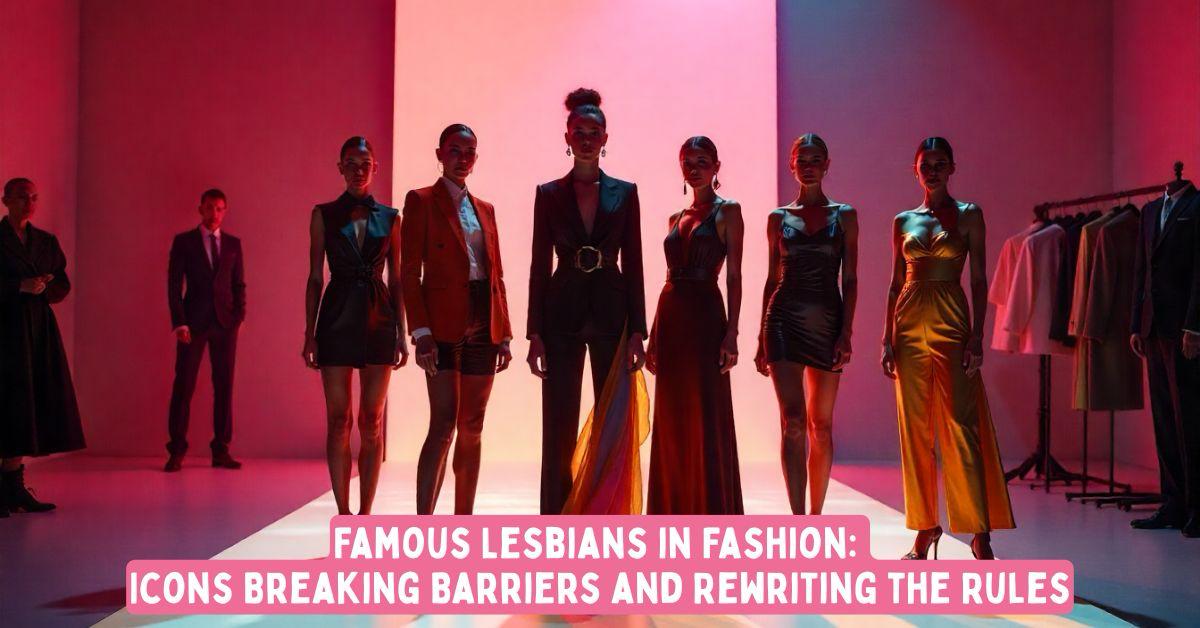
But the truth of the matter is that the fashion industry was always a place where creativity and identity come into conflict, but for too long, it has worked on a don’t ask, don’t tell approach when it came to LGBTQ+ visibility. Fortunately, such days are becoming more and more fashionable than the one of the previous season. Today, famous lesbians in fashion aren’t just existing in the industry— they are at the forefront, remaking it, and showing that authenticity is the power move of the last resort. These women have made their visibility change everything; whether it has been designers who have made empires or models who have broken glass runways. And in 2026 they are only going to continue gaining strength, as younger generations will no longer be content with tokenism. This is not merely a question of who one loves but rather how that identity generates innovation, disrupts the norm and how it is able to make space so that other people may exist unapologetically.
The Trailblazers Who Paved the Runway
When we talk about famous lesbians in fashion, we must begin with the pioneers who made the foundation. These are not mere names in the history book- they are the creators of modern day fashion as we have it. Consider the example of Edith Head the legendary costumer designer who received eight Academy awards and designed costumes of everyone, including Grace Kelly, and Elizabeth Taylor. Although living during the period when the career of openly queer women could be over, her union and relationships with women were a known secret among Hollywood people. Her narrative is a reminder that in times when it was not possible to be seen, queer women were informing the visual language of style. Next comes Halston, the name which is synonymous with 70s glamour, but we can not forget about the women who stood side by side to Roy Halston and helped him to make some of his most iconic moments. Queer DNA has always been flowing in the veins of the fashion world even when the industry was not ready to make it publicly known.
The Designers Who Built Fashion Empires
Fast forward to today, and the landscape looks wildly different. Famous lesbians in fashion are running major brands, starting their own brands, and manipulating the wardrobe of millions of people. They are not in the background but they are the headliners.
Stella McCartney may be the daughter of Paul McCartney, but she has established a business based on her principles of sustainable fashion well before it was the fashionable thing. Although she has remained secretive concerning her personal life, her work eloquently demonstrates her design of fashion with a cause and effect. Clare Waight Keller, the first female artistic director in the history of Givenchy who designed Meghan Markle’s wedding dress has never made her personal life the subject of her work, simply because she does not need to. Her creations say everything more than a headline. And we can’t talk about famous lesbians in fashion without maid mentioning the late Ann Lowe, who not only made high society designs in the 1950s, but also made the wedding dress of Jackie Kennedy. Her story is well overdue with recognition and it shows that visibility is not about the present, but about reclaiming the past.
The Models Who Changed the Game
The runway is literally a concrete and straight and narrow path. However, queer models have been rebelling against those restrictions, and asserting that fashion should mirror the intricacy of the world that it purports to adorn. Cara Delevingne has burst on the scene at the beginning of the 2010s and established herself as one of the most recognizable faces in fashion. She has also expressed her fluid sexuality and same-sex relationships publicly and relied on her huge platform to promote the rights of LGBTQ+. The fact that she is out is not the only relevant thing about her, but rather that she did not allow her queerness to be swept under the carpet or underemphasized as she rose to supermodel status. Then there is Adut Akech, who has modeled in all the major houses including Chanel, Valentino and has become one of the hottest models in the fashion world. Her candidness regarding her identity has made visibility of queers in runways normal globally, particularly since Black queer women are historically marginalized in the industry with both identities. In the future, 2026 and onwards, we are witnessing increased instances of models not willing to play the game of ambiguity. They are collaborating with the brands that embrace them and they drop contracts that require them to conceal and they are shaping their careers in their own way. The balance of power is changing and it needs time.
The Stylists and Creatives Behind the Scenes
Not everyone who shapes fashion stands in front of a camera. Some of the most influential famous lesbians in fashion work behind the scenes, organizing shoots, creative visions and developing how we perceive fashion with the help of editorial filters. Kate Young who has styled everyone including Selena Gomez, Michelle Williams and dozens of red carpets, has based her career on the knowledge of how clothes can narrate. Her work is not just about making people appear good but creating a story with the help of fabric, color, and shape. Queer women such as Catherine Opie have also changed the world of photography by the impact of their photographic work in the fashion industry defying the ideal of beauty and pushing the limits. Her work makes us remember that fashion imagery does not necessarily need to be put in the heteronormative fantasies but can be dirty, real, radical. These behind-the-scenes jobs are becoming more evident in the year 2026. The social media has offered stylists, creative directors and photographers space to present their work and this they do without the need to go through the traditional gatekeepers who may have insisted that they remain secret.
Why Representation Matters Beyond the Runway
Here’s where we need to get critical for a second—because representation without action is just performative nonsense. Yes, it’s incredible to see famous lesbians in fashion on cover of magazines and strolling big runways. However, in case the industry itself is not supporting that visibility with something concrete, there is no point. Brands that are barely doing any favors to queer employees, designers, or communities put a rainbow logo on their products once a year around Pride month and declare this act a form of allyship. We do not go here to get that shallow pandering anymore. The Gen Z and Gen Alpha customers entering their purchasing power in 2026 are capable of detecting inauthenticity at a mile, and they are not purchasing it at all, literally. Real representation involves having queer designers as creative directors, as opposed to one campaign in which queer models are used. It consists of a fair payment to queer creators, safeguarding LGBTQ+ workers in the countries where their identities are criminalized, and leveraging brand power to promote legislative transformation.
The Future Is Authentically Queer
As we look toward the rest of 2026 and beyond, the trajectory is clear—famous lesbians in fashion aren’t going anywhere. They are in reality increasing their influence. The young designers are creating brands as queer in their genes, not because it is part of their marketing plans but because it is a fact. We are witnessing an increase in queer designers and big houses collaborating, more on-runway shows that embrace the variety of femininity and masculinity, and the consumers who are demanding fashion to be more of a mirror to the world in which they exist. The previous generation, which demanded closets and coded language, is fading away, and a new generation, in which authenticity is a must, is coming. The most exciting part? We’re just getting started. The innovation that we will be experiencing in the future will be wild as the barriers are still dropping and younger queer designers have access to resources and platforms. The best fashion is the fashion that challenges norms and queer women have been challenging norms since the dawn of time whether the industry wanted to follow suit or not.
Where We Go From Here
The story of famous lesbians in fashion is not merely the matter of glorifying people-but how their visibility leaves space to all the people who follow them. Each successful designer who creates an effective brand and is out with the queers makes it less difficult on the next one. Any model, who steps on a big runway without concealing her face, puts the industry standards a notch higher. However, do not think the job is complete. The fashion industry has a long way to go before it reaches an actual inclusiveness. We should have more queer women of color in leadership roles, more opportunities to support developing designers who do not conform to one of the classic features, and more responsibility to companies that expect the world to embrace the ideas of diversity and take action. We as consumers and advocates of fashion, also have power. We can amplify queer designers, purchase products in brands that are actually developing LGBTQ+ communities, and expect more of the industry giants. Due to the fact that at the end of the day, fashion is not only about the clothes but also about identity, expression and freedom to be what you are. The famous lesbians in fashion who came before built the foundation. The leaders of today are proliferating the framework. And the ones that are trailing behind them? They will open the entire thing in the most desirable manner. And frankly, I can barely wait to discover what they are going to produce.