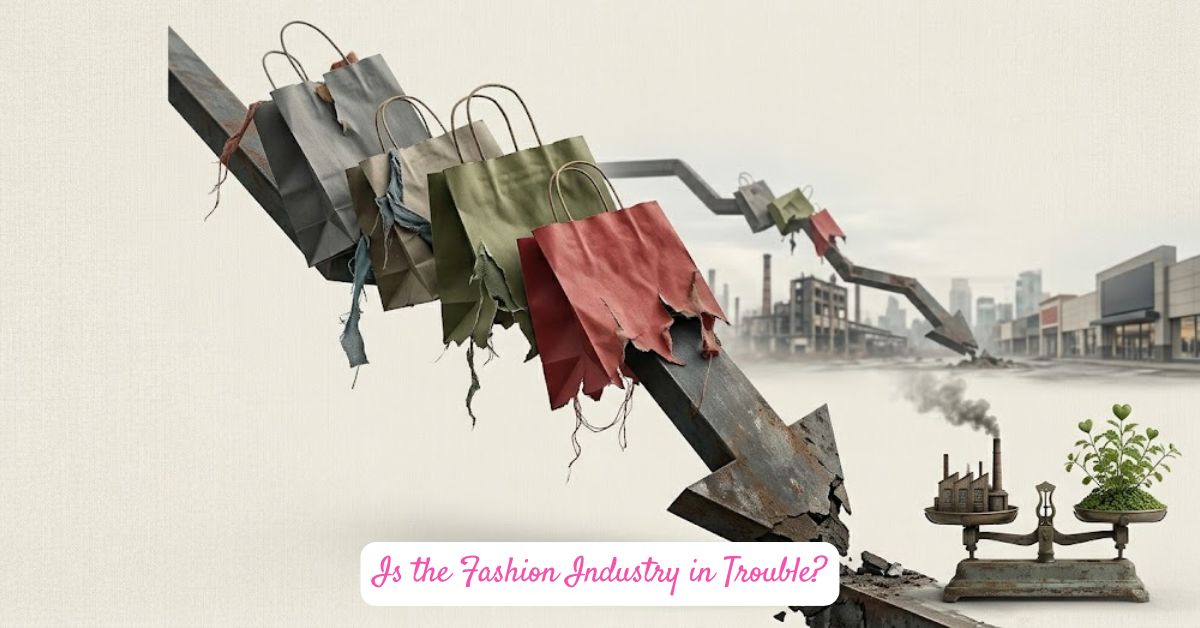
Let’s be honest—is the fashion industry in trouble? The answer to that question, as you have been reading the headlines, closing of the stores, and the entire mess that has been developing over the last several years, is not very reassuring. The fashion industry is experiencing what can best be termed as an identity crisis coupled with a financial meltdown, a dash of environmental guilt. And honestly? Now it is time to speak about it. I have been witnessing this trainwreck with my small slice of the internet and trust me, the cracks in the system are starting to become increasingly more difficult to ignore. So take your coffee (or wine, judgement free), and let’s dive into whether the fashion industry is in trouble and what that means for all of us who actually love clothes.
The Money Problem Nobody Wants to Talk About
And here is the tea which has been boiling for some time: large fashion brands are bleeding money as fashion is leaking out of them (pun very much intended). We are not only referring to small boutiques that are closing their doors down, though believe me, that is also happening. We are discussing legacy brands, the one your parents likely purchased in, filing bankruptcy or being acquired by massively large corporations, just to survive. The numbers don’t lie. The retail traffic is actually on the decline and not only that we all found the pleasure of shopping online in our pajamas. Shopping habits of consumers have changed radically. Consumers are spending less and holding onto things and wondering whether they need that fifth black blazer. Revolutionary idea, I understand. It is especially insane that even the luxury industry which in the past has been able to sail through any kind of storm by selling 3,000 dollar handbags to individuals who do not even bother to check their bank accounts are feeling the squeeze. When not even the wealthy are considering whether to buy or not to buy, you are sure that something is truly wrong.
Fast Fashion’s Reckoning Has Finally Arrived
Do you remember the days when fast fashion labels promised to deliver to us runway looks at pocket change? Oh, the end of that party, and the aftermath is vicious. Fashion brands such as Shein and Fashion Nova have established a business on the potential of unethical, fashion-focused attire at a low cost, yet customers are finally posing the unpleasant questions: Who made this? Under what conditions? And why does it break after two washings? The movement against fast fashion has been developing, and it is not limited to people holding signs anymore. Frequent shoppers are beginning to draw the lines between their cheap t-shirts of 5 dollars and the real human price of 5 dollars. The waste, the pollution, and the exploitation upon which the underbelly of this industry is working, are impossible to be ignored by social media. And here’s where the fashion industry is in trouble becomes crystal clear: Overconsumption and disposability was the business model these companies constructed their whole entire business. The foundation is crumbling now that consumers are coming to the realization of the reality. It would take a lot of grievous harm to turn your back on your fundamental business model.
The Sustainability Pressure Cooker
The elephant in the room that is wearing organic cotton is sustainability. The fashion industry is among the largest polluters in the world, polluting between 2-8 percent of carbon emissions in the world (depending on the one counting and what they are including). In 2026 when the world is literally being redesigned by climate change that is not a cute appearance. Companies are rushing to look green and sustainable, and affix recycled polyester tags onto everything they can and hope we will not notice that their own supply chain remains an environmental nightmare. This green washing game is becoming tiresome and people are becoming more intelligent. We are now able to smell BS a mile away. The thing is that what is really needed to achieve the sustainability is the redesigning of the fashion functioning. This could be viewed as slower production cycles, increased prices, radical transparency and coming to terms with the fact that we do not need 52 micro-seasons a year. That kind of transformation? It is costly, it is complex and endangering to the profit margins that shareholders have been accustomed to.
The Secondhand Revolution Is Eating Their Lunch
The following is one thing that the conventional fashion market had not anticipated: the second hand shopping boom. Thrifting has become a mainstream shopping experience with websites such as Depop, Vinted, Poshmark, and ThredUp making it a trending niche hobby. And now it is not only the broke college kids who are doing it- everybody is doing it. There is no need to purchase new when vintage Levi’s or designer can be found at half the price. When you can save the life of old clothes, why promote doubtful working conditions? The resale market is expected to become twice larger than the fast fashion by 2030, and it is supposed to scare the old-fashioned retailers. Such a reduction is a radical change in the way individuals perceive ownership of clothes. We are leaving the disposable fashion ideology and going towards a more circular economy. It is more environmentally friendly, it is more cost-effective, and frankly speaking? Far more interesting than purchasing the same mass-produced trash everybody is wearing.
Social Media Changed Everything (And Not In A Good Way)
Social media was to democratize fashion, provide everyone with a platform and establish direct relationships between the brands and the consumer. And it did do all that. But it also gave birth to a menace of absolute newness, which was its expectation. Influencers using the same outfit twice? Scandalous. Brands that do not release new collections on a weekly basis? Boring. This has left a cycle of production and consumption which is unsustainable and is currently coming back to haunt. The endless turnover is taking its toll on producers and consumers and the quality of delivery has gone down to match the pace. Besides, the sordid side of fashion became significantly more difficult to conceal by social media. A single viral video of a factory environment or a mountain of textile waste can destroy the reputation of a brand in a flash. The transparency the brands were attempting to shun? They are being thrust with it by anyone holding a smartphone and having an internet connection.
What Happens Next for the Fashion Industry
So is the fashion industry in trouble? Absolutely. However, trouble is also a matter of change. The brands that will make it through the next few years are the ones that are ready to totally redefine their strategy, i.e. slow production, quality products, true sustainability, responsible labor practices and open supply chains. More bankruptcies, more mergers and more traditional retailers are likely to go away. However it will also witness the emergence of smaller more ethical brands. The second hand market will be cannibalizing new clothes sales. Renting and subscriptions may get more common. Technology has the potential to transform the way we design, make and wear fashion. The fashion industry in trouble is not necessarily the death sentence of fashion- it is the evolution at the sword. And honestly? The old model deserved to die. It was constructed on exploitation, excessive consumption and pollution of the environment. Good riddance.
The Silver Lining in All This Chaos
This is what has made me hopeful: people are beginning to care once more. It is not only regarding their appearance, but also regarding their origin, who made the clothes and how they are affecting people. That is one of the basic changes that cannot be reversed. There are increased efforts by people in learning how to sew, repair and upcycle their own clothes. Sustainable fashion forming communities. Creators of the new generation who are able to create a brand based on ethical values. Customers who require transparency and voting with their wallets in the event of non-delivery of brands. Yes, the fashion industry is in trouble, but maybe it needed to be. It is true that sometimes systems have to be broken down so that they can be replaced in a better way. They are not whether fashion will live or not, but what shape will it take when it comes out the other end. The fashion industry so to speak? That’s probably dead. But fashion, the innovation, the self-representation, the craft, that will last forever. It will simply have a different look in future. And personally? I believe that is what we should have. Buckle up, then, as the coming few years are going to be rocky. The fashion industry in trouble is the story of our time, and we’re all living through this transformation whether we like it or not. At least it won’t be boring.