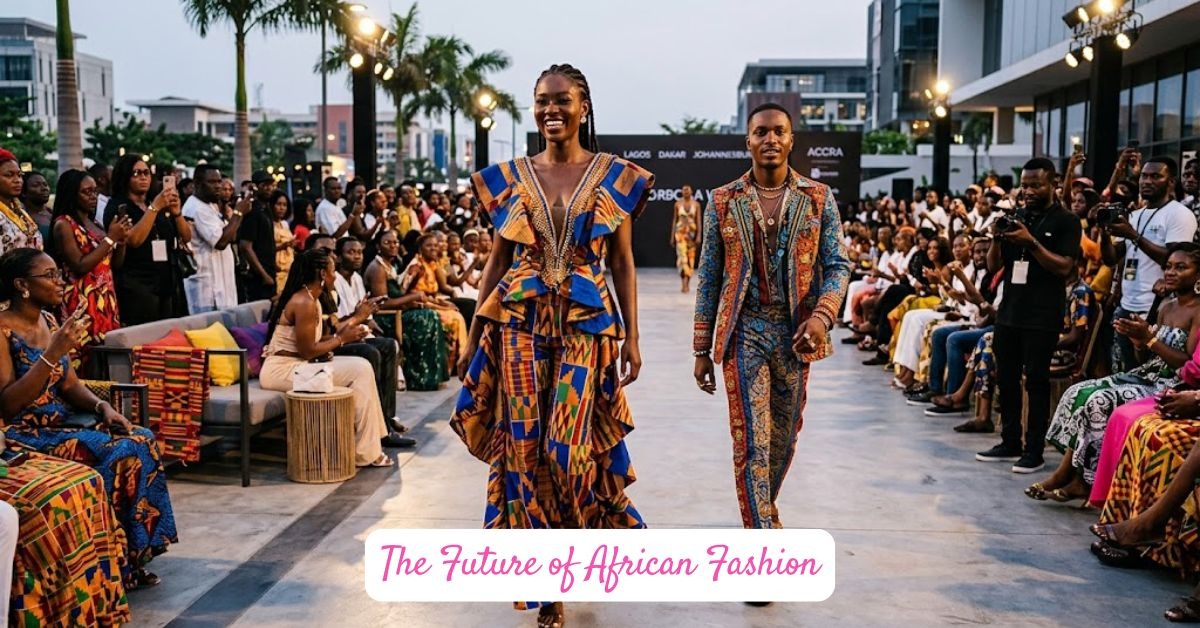
The fashion industry around the world has taken inspiration from different parts of Africa for a long time without giving credit to African designers who have had to work significantly harder than international brands to be recognised as equals. In 2026, this trend has flipped; Africa is in the centre of the fashion industry at Lagos, Dakar, Johannesburg, and Accra where money and people will now be finding much younger and more diverse talent because of the location of the established global consumer base. The future of African fashion is not coming , it is already here, it is loud, and it is absolutely stunning.
The World Finally Woke Up (A Little Late, But Okay)
More and more, the fashion designs produced by African haute couture are being appreciated both through global runway and A-List celebrity events, signaling the slow but steady rise of global awareness about the intricacy, detail, and pageantry of Africa’s fashion traditions that most of the world was previously unaware of except for those who live and work in Africa.
The African fashion market has exploded during the past ten years as a result of advances in technology, increased pride in cultural heritage, and appreciation for African designs by the global community. As we head into 2026 and beyond, excitement around Africa’s fashion will continue to grow at an extraordinary rate.
Heritage Is the New Luxury
One of the biggest things defining the future of African fashion is this powerful reframing , heritage is not a trend. This is not an inspiration board for a high-end, European fashion house, this is the actual product.
Traditional textiles (Ankara, Kente, Adire, and Aso-Oke) are being reinterpreted into modern silhouettes and defined by artisanal luxury (handmade textiles, embroidery and beads) as premium fashion; therefore, designers are not simply adding cultural references to their garments, but rather creating an entire narrative via fabric. The world of fast fashion is overrun with sameness, so the global population has responded positively to something that has true meaning; therefore, creating a significant market opportunity.
The Designers You Need to Know Right Now
No article about the future of African fashion is complete without talking about the people actually doing the work , and this generation of designers is genuinely elite.
Thebe Magugu
The LVMH Prize for Young Designers was awarded to African designer Thebe Magugu making him the first African to win this very well respected prize. The time journal also voted that the flagship store of Thebe Magugu called the Magugu House will be one of the must visit cultural destination locations of 2024 because it doesn’t only function as a retail store, it is a cultural space for exhibitions and events. Thebe Magugu’s designs, being very much a product of scholarly research that demonstrates a strong connection to South Africa and his own creative experience through each of his creations, can be validated by having the opportunity to design clothing for Lupita Nyong’o.
Tongoro by Sarah Diouf
For her record-breaking Renaissance Tour in 2023, Beyoncé reached out to several brands and one of them was Tongoro, founded by Sarah Diouf in Dakar, Senegal. Tongoro is a completely Made-in-Africa fashion label and has achieved global recognition because of quality and intentionality , not hype. The label practices ethical production and supports local artisans in making bright, wearable garments. Beyoncé, Naomi Campbell, Alicia Keys and Burna Boy are all fond of Tongoro’s work; their names say it all.
Orange Culture by Adebayo Oke-Lawal
Founded by Adebayo Oke-Lawal , Orange Culture is an African inspired unisex clothing company that breaks away from the normality of gender and gives you the options of wearing their prints with modern style. This kind of fluidity in fashion was once seen as extremely risky, but now (in 2026) it is considered essential. No longer do clothing styles box people into specific groups; the fashion of the future will be fluid; the entire world will accept this idea; Orange Culture had been on board with this concept for many years.
Maxhosa Africa by Laduma Ngxokolo
The brand’s knitwear is an homage to the Xhosa people and has a specific cultural identity which makes this product one-of-a-kind in regard to replication or imitation without context. Have showcased the Maxhosa collections at London Fashion Week repeatedly providing an accurate cultural expression through the stitch of the product.
Sustainability Is Not Optional Anymore
Here is where we need to have an honest conversation. A lot of brands , African and otherwise , throw around words like “sustainable” and “ethical” like they are accessories. But the future of African fashion is being shaped by designers who are actually building systems, not just marketing copy.
Kenya’s designer Katungulu Mwendwa (Katush) has developed a business model that sources all of her materials from Africa. The majority of the buttons she uses are handmade from Kenya, while the cotton comes from Burkina Faso, Uganda and Tanzania. This is a philosophical way of creating not only a supply chain, but of developing an individual supply chain as well.
Iamisigo based in Nigeria and Osei-Duro based in Ghana promote awareness about the use of sustainable developed materials and timeless fashion. Fashion’s conversation has shifted from fast to slow fashion, to then moving towards a discussion on the meaning of fashion vs not. Africa has always produced product that is meaningful to consumers.
The Raw Materials Problem Nobody Wants to Talk About
We need to look critically at this because this is very strong evidence. There are 37 African nations that grow cotton, but Africa also imports $23.1 billion of textiles each year, including clothes and shoes. Read that again , Africa produces cotton, but Africa buys fabric from other places. This is no accident; it is one of the largest structural issues which create difficulties for the industry as a whole. Without addressing the issue at a policy level, African designers will continue having to pay high prices for accessing materials that are produced in the African continent. This is not only an issue related to fashion; it is a problem related to how we govern our countries and how we build our infrastructures. The fashion industry on its own cannot change this.
The Digital Revolution Changed Everything
Fashion trends are manifested very quickly on social media platforms like Instagram and TikTok and in fashion publications, and with hybrid fashion shows, designers are establishing connections with new generations of consumers faster than ever.
From a tactical perspective, this provides an opportunity for a designer in Nairobi to create a global audience well before stepping on a runway in Paris; or for a Lagos-based brand to go viral in New York City. Gatekeepers of traditional fashion (magazine editors, department stores, the fashion week circuit) are being pushed out of the fashion system and, as a result, there are tremendous opportunities for African designers to reap the benefits of this shift.
Social media platforms provide designers the ability to showcase their designs to an exponentially larger audience, resulting in a much larger fan base and a greater number of followers worldwide. This has dramatically transformed the global fashion audience into a more diverse and inclusive audience that encompasses many different cultures. However, this change has also created an increased amount of noise and competition in the fashion industry. Therefore, as a result, the importance of authenticity will continue to rise in order to be successful in the fashion industry.
Africa Is Building Its Own Infrastructure Now
This is an opportunity to shed some light on an important development that is not being given enough credit, which has the potential to do even more for designing professionals than just producing designers through establishing a sustainable ecosystem for them. The Hub of Africa Fashion Week in Addis Ababa (HAFW), which will be 15 years old in 2026, is an annual event hosting runway shows, roundtable discussions, and other events dedicated to highlighting and promoting African creativity in the international fashion market. And just last month, on March 24, 2026, Accra’s creative community moved into a new phase by officially establishing the West African Fashion Consortium Ghana through an event that brought together fashion industry leaders, policymakers, funders, and other cultural stakeholders around the theme of ‘”Uniting the Creative Value Chain: Together We Rise.”’
These types of institutional developments are what will distinguish a moment from a movement. While fashion weeks are valuable for gaining attention, there are no lasting industries unless they are supported by consortiums, regulatory frameworks, and funding mechanisms.
What the Future Actually Looks Like
Fashion designers from all around the globe will continue to show work that represents the diversity found in many African cultures; an audience who wants to learn from the many ways Africans express themselves through textiles exists. Understanding this diversity is critical to know that African fashion represents far more than a single entity; it encompasses more than 50 nations with a variety of ethnicities that represent centuries of diverse textile traditions that cannot be homogenized or diminished.
The next few years will bring a plethora of surprises based on the many new ways to connect and share ideas, between events focused on Africa, major international partnerships and access to innovative digital technologies that will push African creative contributions to the forefront of worldwide discussion.
The future is not necessarily African fashion finally being allowed onto the global stage; it is about African fashion establishing itself as a force within the global spectrum. The change in the way African fashion now perceives itself , changing how it approaches the world from seeking validation to demanding acknowledgement for its significance , creates what will be one of the most historic transformations in how we view African fashion!
The future of African fashion is not just about clothes. Who controls the narrative, who profits from creativity, and who defines beauty and luxury in a global context create an interdependent relationship that drives success for the designers, platforms, and institutions building this new industry. These three entities are creating an industry that answers all three questions transparently and candidly. It is time for these questions to be answered in a manner that provides new opportunities, and positive change, across the globe.